Stories and interviews
Submit
Info
Subscribe About Contact The Team
Online Exhibitions
Group Show 70: Under the Sun and the Moon Group Show 69: Photo for Non-Majors (part 2) Group Show 69: Photo for Non-Majors (part 1) Group Show 68: Four Degrees Group Show 67: Embracing Stillness Group Show 66: La Frontera Group Show 65: Two Way Lens Group Show 64: Tropes Gone Wild Group Show 63: Love, Actually Group Show 62: 100% Fun Group Show 61: Loss Group Show 60: Winter Pictures Group Show 59: Numerology Group Show 58: On Death Group Show 57: New Psychedelics Group Show 56: Source Material Group Show 55: Year in Reverse Group show 54: Seeing Sound Group Show 53: On Beauty Group Show 52: Alternative Facts Group Show 51: Future Isms Group Show 50: 'Roid Rage Group Show 48: Winter Pictures Group Show 47: Space Jamz group show 46: F*cked Up group show 45: New Jack City group show 44: Radical Color group show 43: TMWT group show 42: Occultisms group show 41: New Cats in Art Photography group show 40: #Latergram group show 39: Tough Turf P. 2/2 group show 39: Tough Turf P. 1/2

Humble Arts Foundation

New Photography
Stories and interviews
Submit
Info
Subscribe About Contact The Team
Online Exhibitions
Group Show 70: Under the Sun and the Moon Group Show 69: Photo for Non-Majors (part 2) Group Show 69: Photo for Non-Majors (part 1) Group Show 68: Four Degrees Group Show 67: Embracing Stillness Group Show 66: La Frontera Group Show 65: Two Way Lens Group Show 64: Tropes Gone Wild Group Show 63: Love, Actually Group Show 62: 100% Fun Group Show 61: Loss Group Show 60: Winter Pictures Group Show 59: Numerology Group Show 58: On Death Group Show 57: New Psychedelics Group Show 56: Source Material Group Show 55: Year in Reverse Group show 54: Seeing Sound Group Show 53: On Beauty Group Show 52: Alternative Facts Group Show 51: Future Isms Group Show 50: 'Roid Rage Group Show 48: Winter Pictures Group Show 47: Space Jamz group show 46: F*cked Up group show 45: New Jack City group show 44: Radical Color group show 43: TMWT group show 42: Occultisms group show 41: New Cats in Art Photography group show 40: #Latergram group show 39: Tough Turf P. 2/2 group show 39: Tough Turf P. 1/2
Jake and Gray © Fazilat Soukhakian

Jake and Gray © Fazilat Soukhakian

A Struggle Between Faith and Love

Fazilat Soukhakian's portraits of LGBTQ+ couples in Utah show the conflict between religious and sexual identity and the pursuit to be treated as "normal."

When Fazilat Soukhakian moved from Iran to Utah, she was surprised to find similar cultural discrimination against LGBTQ+ individuals. While there are clear differences – the Iranian government still punishes queerness with the death penalty – the shared experience of suppression, alienation, and banishment struck a chord.

Soukhakian observed the Church of Jesus Christ of Latter-day Saints' pervasive cultural power in Utah, which creates deep dilemmas for LGBTQ+ individuals with Mormon backgrounds who struggle between maintaining their faith and acting on their desires.

“Despite the church’s teachings,” she writes, “they are determined in their pursuit of love, each taking their own path by either enduring through the scrutiny of their surroundings or taking a step away from the church.” Many of these individuals have a complicated relationship reconciling both identities.

Soukhakian’s new series Queer In Utah aims to normalize LGBTQ+ relationships in a religious and cultural landscape that won’t have them. Playing off family portrait tropes found in the households of many Utah heterosexual couples, she highlights each couple's pursuit of love and joy within a culture that wants to suppress them.

After meeting at PhotoNola’s annual portfolio reviews in December, I contacted Soukhakian to learn more about her work.

Jon Feinstein in conversation with Fazilat Soukhakian
Read more …
PostedJanuary 19, 2021
AuthorJon Feinstein
CategoriesPortfolio, Galleries
TagsFazilat Soukhakian, Queer in Utah, homophobia in the Mormon chuch, religion and sexuality, Contemporary Portraiture, new photography, Utah photographers, photographer interviews
© Tiffany Sutton

© Tiffany Sutton

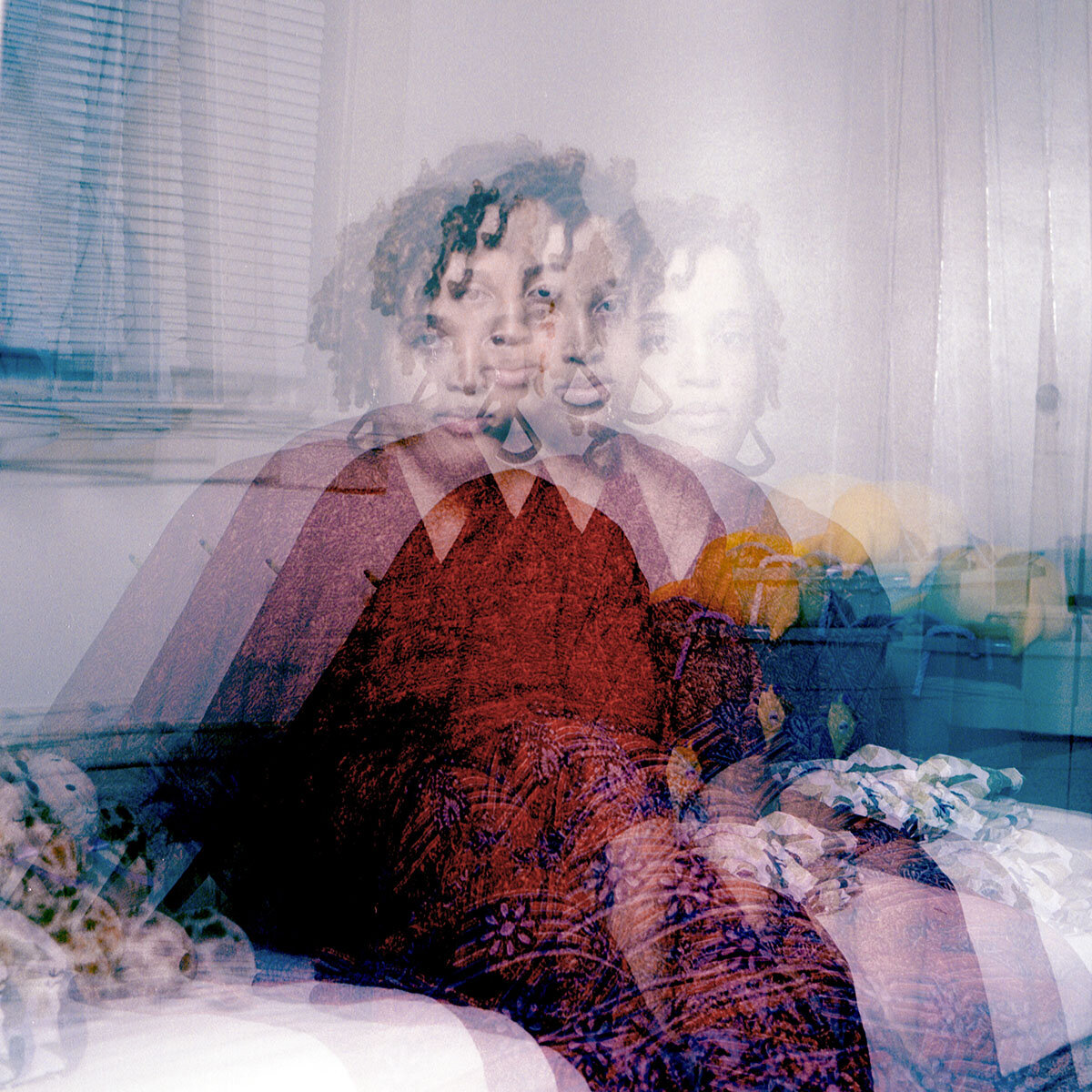
Layers of Representation In Multiple Exposures

Tiffany Sutton's multiple exposure portraits show the complexity of visualizing identity.

When photographing with film, multiple exposures are often accidents or visual gimmicks. The film failed to advance on a roll, abstracting a few images onto a single frame. Looks cool. Can it go deeper? Absolutely.

Tiffany Sutton’s multiple exposures consider the limitations, yet endless possibilities of meaning and representation in photographic portraiture. A moment to slow down and carefully examine the person being photographed as more than just a visual specimen. To examine the full scope of an individual - their culture, gender, influences, joys, and struggles. To look with infinite layers of psychological space. Perhaps a light-sensitive channeling of futurism and abstract expressionism. An opportunity, as Sutton describes, “to catch every moment in the subject’s life.”

I spoke with Sutton – whose work we recently included in Humble’s “Two Way Lens: Portraits As Empathy” exhibition - to learn more about her process and ideas on portraiture’s wide potential.

Jon Feinstein in conversation with Tiffany Sutton

Read more …
PostedDecember 10, 2020
AuthorJon Feinstein
CategoriesArtists, Portfolio
TagsTiffany Sutton, Contemporary portraiture, multiple-exposure photography, film photography, Black Body Radiation series, Black Joy
© ChrisSoFly

© ChrisSoFly

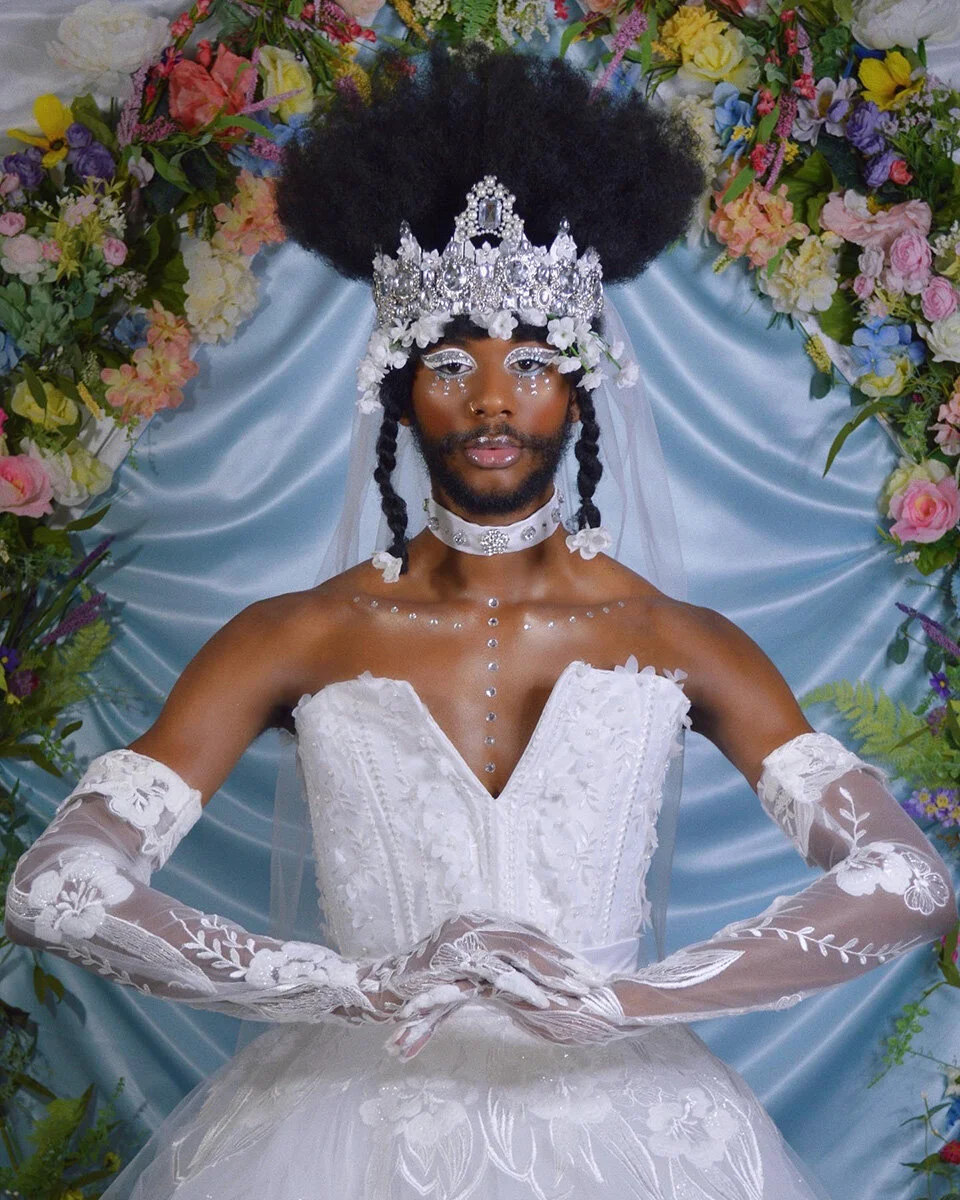
These Self-Portraits Show That Boys Can Be Princesses Too

ChrisSoFly’s self-portraits celebrate his love for fashion, music, and awakening from rigid gender roles.

Growing up, the Sanford, Florida-based multidisciplinary artist never imagined he’d feel comfortable wearing dresses, wigs, and makeup, and sharing photos of himself with the world. “Once I finally put my own fear of judgment aside and became comfortable in my own skin and started dressing how I wanted and expressing myself freely,” Chris writes, “ I realized that this may be my purpose….showing that boys can be princesses too.”

In his self-portraits, which he shares predominantly on Instagram – often with tens of thousands of likes and hundreds of comments – Chris unapologetically and joyfully confronts the camera with bedazzled glory.
The series started earlier this year when Chris began designing fashion pieces while teaching himself to sew through Youtube videos. His creations manifest themselves as pastel dresses, flowers in his hair, posing before floral backdrops that highlight his exuberance and power. I spoke with Chris to learn more about his experience and work.

I spoke with Chris to learn more about his experience and work.

Jon Feinstein in conversation with ChrisSoFly

Read more …
PostedDecember 3, 2020
AuthorJon Feinstein
CategoriesArtists, Portfolio
TagsChrisSoFly, self-portraiture, collaborative portraiture, fashion photography, multi-disciplinary artists, toxic masculinity, queer identity and photography, new photography, contemporary portraiture
Untitled #33, Jersey City, NJ © Jon Henry

Untitled #33, Jersey City, NJ © Jon Henry

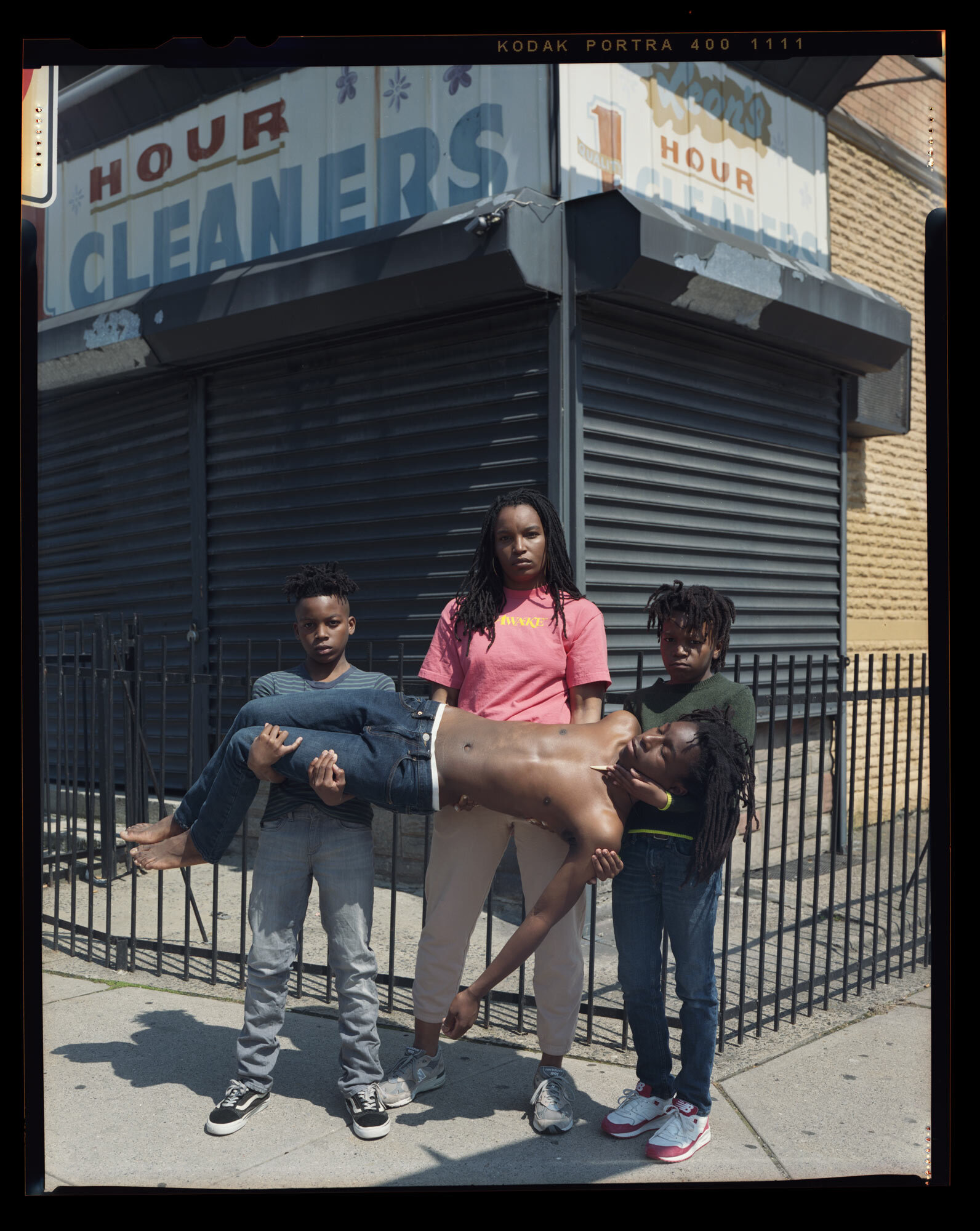
These Portraits Process Black Mothers' Greatest Fear

Jon Henry’s ongoing series, Stranger Fruit, uses the classical pietà – Michelangelo’s sculpture of Mary cradling Jesus – to illustrate the enduring pain of Black mothers who have lost their sons to police brutality.

New York City-based photographer Jon Henry stages portraits with various women around the United States cradling their sons on street corners, in parking lots, in front of government buildings; everyday spaces that symbolize the horrific commonplace-ness of racist, systemic murder. While Michelangelo’s Pieta casts Mary looking down at Jesus, many of the women in Henry’s portraits lock eyes with the lens, and us as viewers, returning our gaze with sadness, strength, and, depending on who’s looking, condemnation.

Henry paces these portraits with images of the women in bedrooms and other quiet, empty spaces, a signal of contemplating loss and endurance. “Lost in the furor of media coverage, lawsuits, and protests,” Henry writes, “is the plight of the mother. Who, regardless of the legal outcome, must carry on without her child.”

While the women in Henry’s photos have not actually lost their sons, these slow, reflective portrait sessions, made with a 4x5 camera represent living with a constant fear of police violence.

Henry occasionally intersperses text from a few of the mothers he photographs, often organized into poetic stanzas. For Henry, these passages speak to the experience of mothers across the country:

I feel sad,

sad that mothers actually
have to go through this…

My son was able to get up
and put back on his clothes
Others not so much.

They are still mentally frozen
in that position, that sadness,
that brokenness. I feel guilty

to be relieved that it’s just a
picture because for others
it’s a reality.

I feel scared, I feel next. I feel like Tyler could be the
next hashtag.”


Henry started the series in 2014 in response to the police murders of Michael Brown, Eric Garner, and Tamir Rice, and continues as they never seem to end. He recently won the Arnold Newman Prize for New Directions in Photographic Portraiture for this series which will be on display at The Griffin Museum through October 23rd and has several images in Photographic Center Northwest’s latest exhibition Examining The American Dream in Seattle, Washington, up through December 10, 2020.

Jon Feinstein in conversation with Jon Henry

Read more …
PostedOctober 15, 2020
AuthorJon Feinstein
CategoriesArtists, Portfolio
TagsJon Henry, contemporary portrait photography, Arnold Newman Prize, large format portraiture, pieta, concerned photography
© Marissa Alper

© Marissa Alper

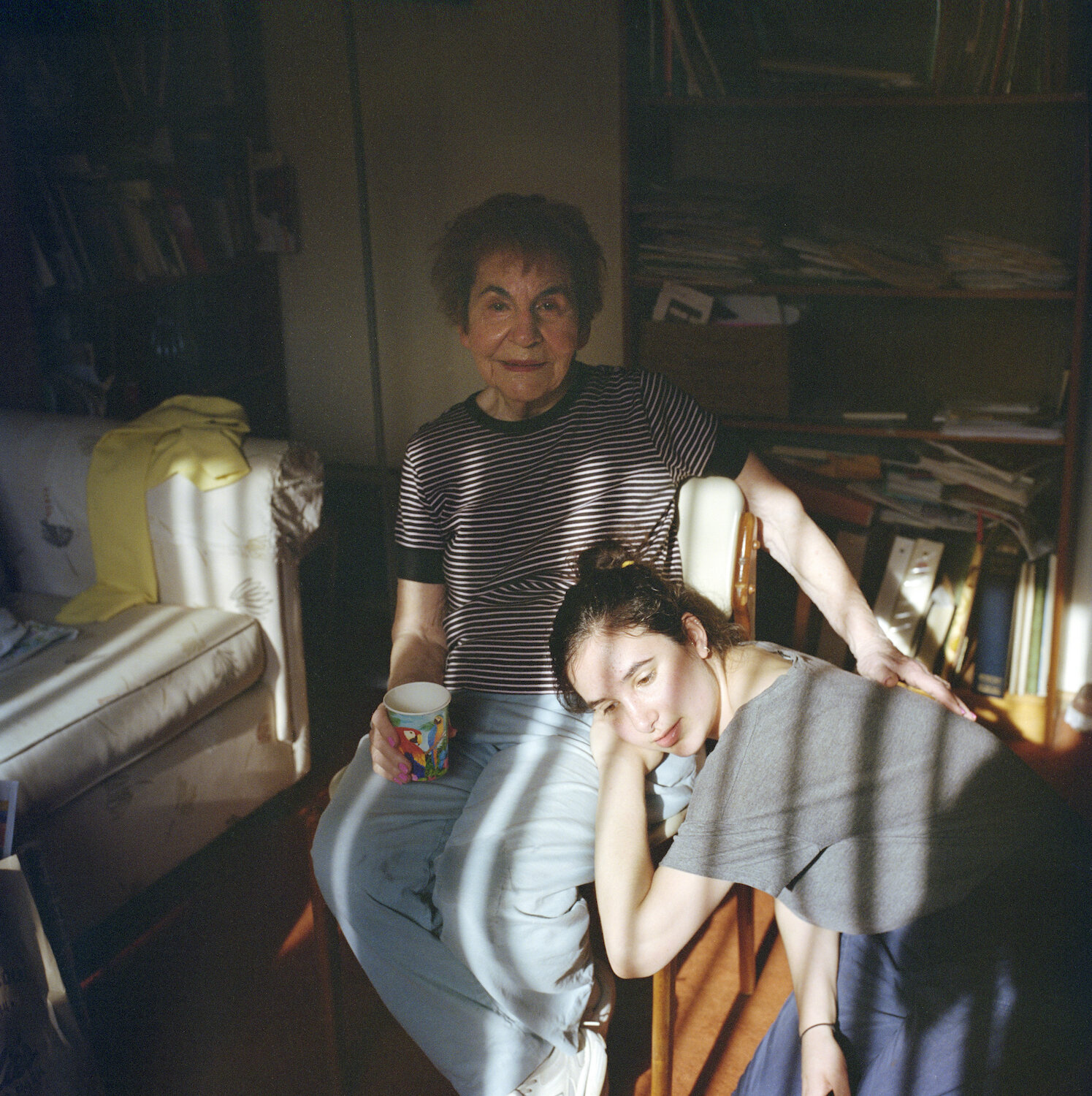
Portraits of Holocaust Survivors and Their Grandchildren

Marissa Alper’s ongoing photography series focuses on the beauty of the lives created by those who survived the Holocaust, with parallels to today’s rise of fascism in the United States.

For many Holocaust survivors and their descendants, Hitler’s atrocities are a haunting specter. Telling and recording their stories is crucial to preserving their memories and helping generations forward learn from history’s mistakes. This holds true for photographer Marissa Alper, who has been photographing her grandmother and other Holocaust survivors with their grandchildren.

Alper’s portraits, while cast in the shadow of atrocity, celebrate life and perseverance and focus on the strength and beauty of those who escaped and lived on. The survivors are often smiling, framed by warm light, presenting their grandchildren as proof of survival.

Yet Alper's photographs also sit within the increasingly grim haze of Trump’s America. For Alper, today’s political climate feels eerily reminiscent of the emergence of Fascism in Hitler’s Germany (ICE camps and forced hysterectomies, demonizing BLM protestors, systemic racism, and Trump’s refusal to accept potential election results…)
“It feels like we didn’t learn from the past,” writes Alper, “and we’re letting those who survived down.”

Alper’s series is currently on hold to protect the health and safety of the survivors. We caught up to discuss its current state and dig deeper into the story behind the work.

Jon Feinstein in conversation with Marissa Alper

Read more …
PostedOctober 1, 2020
AuthorJon Feinstein
CategoriesArtists, Portfolio
TagsMarissa Alper, Holocaust survivors, shoah, portraits of Holocaust survivors
Newer / Older

Founded in 2005, Humble Arts Foundation is dedicated to supporting and promoting new art photography.