Asger Carlsen

Wrong, 26/39

Wrong, 26/39

The images of Asger Carlsen occupy the hazy cloud-cuckoo land between analog and digital photography. His pictures maintain an interesting haphazardness, a truth-before-the lens aesthetic, which is combined with eerie digital manipulations. The apparent on-camera flash and black and white tones further heighten the disconnect between the “real” and the fabricated. Carlsen often employs the visual cues of snapshot photography to suggest a physical, temporal connection between the photographer and the subject. His images depict a version of reality that is both firsthand and dissembling.

Wrong, 17/39

Wrong, 17/39

Wrong, 29/39

Wrong, 29/39

Hester, 13/19

Hester, 13/19

The series Wrong posits the fantastical as quotidian. Persons with prosthetic legs fresh from the wood-shop, or those who may be blessed with backward-bending knees are shown as ordinary as anyone else. One image, similar to William Eggleston’s photograph of a man touching delicately an orange United States Air Force craft, depicts a man kissing, groping a towering mound of otherworldly ectoplasm. Carlsen’s microcosm equalizes all disparate activity; lycanthropes and Janus-faced characters coolly inhabit scenes lit by the glare of the camera’s clinical flash. All of which suggests both the degree to which the camera normalizes and objectifies experience, as well as the reticence of viewers to accept as factual all forms of photographic vision. Wrong grafts a truthful and authoritative aesthetic upon deliberately fanciful constructions.

Hester, 10/19

Hester, 10/19

Hester continues in the casual, documentary style but is concerned with the artistic nude. The camera’s phallic gaze inspects malformed, gender-indeterminate masses of flesh and limbs. Carlsen undermines the artist’s role as traditional maker, shaper and possessor of subjects; the digital reassembling of the human body into perverse shapes mirrors the greedy infiltration of the subject, which ultimately refigures and dehumanizes both artist and sitter.

add this
 

Brea Souders

Spider Universe

Spider Universe

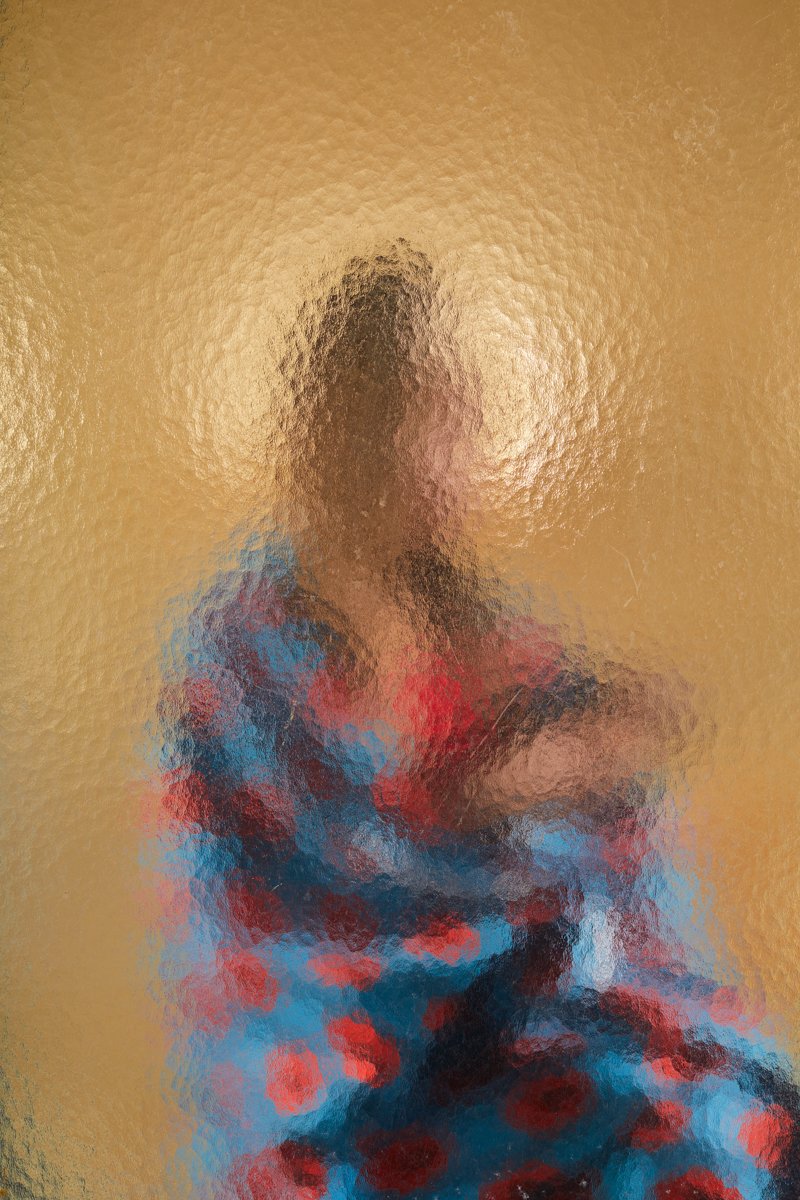
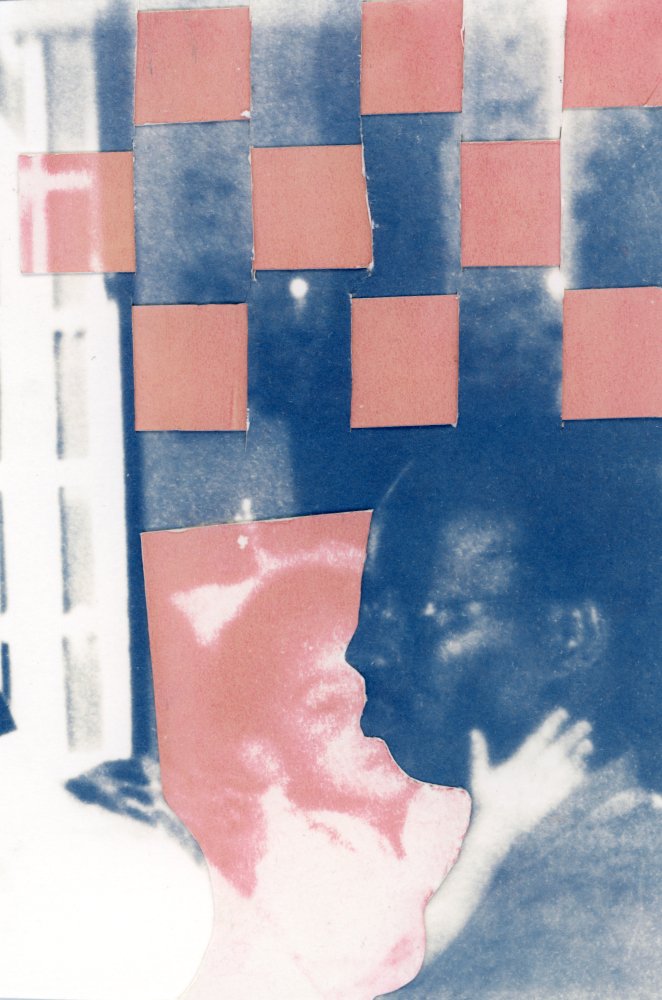
Brea Souders is an American artist with lineage from Ireland, Italy and France, countries ripe with art history and tradition—both religious and familial—that have collectively produced countless descendants in the US. Souders’ deep rooted desire to connect with personal ethnic lines leads her between lingering traces of the proverbial outsider, familiarity and the search for belonging and meaning. As the 2011 WIP-LTI/Lightside Materials Grant Recipient, Souders will continue this new series of elegant images examining and exploring introspection and place within her varied European ancestry.

Seine Fingers

Seine Fingers

Souders photographs operate on innate, intricate levels of subjective emotion and impression, instinctual signs of sincere yearning and paucity. The series is obscurely demure and delicate, both feminine and thoughtful—reminiscent of a familiar pleasing sound or aromatic smell that is meaningful and distinct—yet cannot be placed in memory.

Sunburn in Naples

Sunburn in Naples

Souders created her initial photograph of the series in Italy in May, 2010, titled Sunburn in Naples. This image “encapsulated her feelings—a desire to own her Italian ancestral roots, to be wholly a part of something, but an inability to do so. The Neapolitan sun burned the Irish skin that she inherited from her father’s father. Upon her return to the US, she continued her work, creating images that reflect her research of Christianity, art history, European history, family traditions and the desire to connect all of the pieces together into one unified whole.”

Bed Moon

Bed Moon

With many generations of Americans moving further and further away from the motherland traditions, customs and roots of their immigrant forebears, the general sense of belonging (as well as support and understanding of the humanities) diminishes on innumerable levels—both personal and societal. Souders’ images mirror the dilemma of so many American’s deep cultural lack, homogenizing the sense of loss and confusion of self and place. Souders’ images demonstrate impressions of precious and idiosyncratic awareness of fleeting time, portraying snippets of base aesthetic experience of the emotive tourist searching for identity, significance and rapport. She delicately and poignantly reminds the viewer that wherever you go, there you are…and perhaps delving further into her unique perspective of essential being and locus provides a contemporary tenor of memento mori.

Butter Moth

Butter Moth

Brea Souders was born in Frederick, Maryland, and studied photography at the University of Maryland Baltimore County. Her work has been exhibited and screened at institutions such as Abrons Arts Center, Jack the Pelican Presents, and Affirmation Arts in New York City; the Corcoran Gallery of Art and the American University Museum, Washington, D.C; and at festivals including the New York Photo Festival; PhotoIreland in Dublin; the Singapore International Photography Festival, and Head On in Sydney, Australia. Her work has been supported by the Camac Art Centre and Fondation Ténot, Marnay-sur-Seine, France; The Millay Colony of the Arts, Austerlitz, NY and the Camera Club of New York.

Selected publications and clients include: New York Magazine, Gar-de, Vogue Paris, Real Simple, Dear Dave, Canteen, Warner Brothers Records, and Feltrinelli Publishing House. Brea lives and works in New York City.

add this
 

Marget Long

Light Years Ago, c-print, 40 x 30 in., 2011

Light Years Ago, c-print, 40 x 30 in., 2011

The representation of history is the driving force behind artist, Marget Long’s practice. She works in a wide range of mediums including, photographs, video and text. Most of her projects explore the history of photography, such as “Bad Light,” which considers how we experience the use of flash in photography over the years through its technological advances. “$pooky Photographs for Sale$,” is a running series of photographs, many vintage from the early 1900s, found for sale online under the tagline of “spooky photographs.” In her most recent project, “A Daguerreotype Sideways: Re-visiting Mathew Brady’s Studio @ 359 Broadway,” Long also investigates the meanings behind the history of photographic space. Her innovative approach and explorations into the practice of photography, from its history to its present day interpretations, set Long apart from her contemporaries.

Long received a BA from Harvard University and an MFA from the Rhode Island School of Design. Her work has been exhibited both nationally and internationally at Anthology Film Archives, Exit Art, Art Institute of Chicago, Contemporary Artists Center, Cinders, American Cinémathèque, DGA Video in Los Angeles, and in a solo show at Safe-T Gallery in Brooklyn. She lives and works in New York.

Briana McKinnell: What initiated your romance with photography?

Marget Long: Funny you should use the word “romance” because lately I’ve been struck by how many of my projects veer towards the darker side of photography—its ties to modes of surveillance, violence and regulation of the body. Even with my project on Mathew Brady’s studio building—potentially a hyper-romantic site for a photographer—I was, in the end, most fascinated by the fact that Brady went bankrupt. How did one of the 19th century’s most vibrant commercial studios end up gutted and sold for parts by a team of lawyers? I guess bankruptcy – financial, emotional or otherwise — is the dark side of romance!

I’ve always been deeply attracted, even romantic, about cameras. The way they look and feel. The sound the shutter makes. You know, the mystery of the black box. Both my father and my grandfather were avid amateur photographers. My grandfather kept all his cameras, projectors and flash attachments in a narrow closet in the corner of his living room. As a very small child, I remember opening and closing that closet, over and over, just to look at that amazing stockpile of cameras.

BM: Essentially what drives your work? Where do you draw your inspiration from?

ML: This might sound pretty basic but I’m driven to communicate ideas, to share experiences, to pose questions about the world in which we live. I’m also quite interested in the bigger, trickier questions of photographic representation itself. How do photographs work? When do they fail us?

In the case of my most recent project, ”A Daguerreotype Sideways,” I was presented with a difficult representational problem. I had access to Mathew Brady’s former daguerreotype studio–this incredible site of artistic production—that now bears very few traces of that past. In some ways, the building was just another vacant industrial building in Tribeca, ripe for condo conversion. Yet as someone who works with photographs, I had all kinds of deep emotional, physical and intellectual responses to that building, particularly Brady’s skylight, which is still intact. How could I find a way to depict that space and that history with photographs? How can a photograph begin to describe what we experience when we step into a historic space? And to compound the problem, how does this pursuit change when so many iconic photographs had been produced in Brady’s studio, like the photo of Abraham Lincoln on a five-dollar bill.

BM: What artists inspire you, whether they are other photographers, musicians, painters, etc.?

ML: In his piece, Some Rules for Students and Teachers, John Cage wrote, “Always be around. Come and go to everything. Always go to classes. Read anything you can get your hands on. Look at movies carefully, often. Save everything—it might come in handy later.” I try to live like that. I go to see everything I can. I read a lot, everything from trashy novels, to Cabinet Magazine, to obscure camera manuals from the 1960s. I really enjoy queer performance, the recent collaborative work of Sharon Hayes and Brooke O’Hara (last spring, they did an amazing eight-hour rendition of Virginia Woolf’s To the Lighthouse), Jibz Cameron (aka Dynasty Handbag), the legendary duo Peggy Shaw and Lois Weaver, and the incredible work of Justin Vivian Bond, who inspires me to no end. Reading Martha Rosler’s writing on feminism, architecture and documentary photography were pivotal for me, as was the work of Deborah Bright and Penelope Umbrico, both of whom were my teachers at RISD. I’m indebted to the work of Johan Grimonprez and Mathew Buckingham, as they each present history as a subject open for unlimited play and critical inquiry. I also have an important on-going dialogue about historiography with my girlfriend, Carolyn Dinshaw, author of the book Getting Medieval. I find Pradeep Dalal’s wavering scanner-made tableaux of Indian subjects to be very moving. And Liz Deschenes optically-charged photos are just plain awesome. Finally, I admire the work of many younger artists like Miranda Lichtenstein, Joachim Schmidt, João Enxuto, and Daniel Gordon, especially his photographs of himself flying. Now there’s my kind of romantic.

BM: Much of your practice draws on the history of photography, what draws you so much to the past?

ML: History, for me, is a live thing and that, of course, includes the history of photography. It reverberates in the everyday. It’s both everywhere and nowhere–in the air, in my body, and then, poof, it’s gone. This elusiveness attracts me. As an artist, I feel it’s an open invitation to question how our histories get told and who gets to tell them. More generally, feeling the presence (or absence) of history allows us to think more expansively about the present moment and sometimes, in rare spark-like bursts, allows us dream about a better future.

Mathew Brady's Skylight, c-print, 20 x 16 in.

Mathew Brady's Skylight, c-print, 20 x 16 in.

BM: Could you talk about your most recent project, A Daguerreotype Sideways: Re-Visiting Mathew Brady’s Studio @ 359 Broadway?

ML: Sure. I’ve already talked a bit about that project but I should probably back up. In 2009, I gained access to the vacant building on lower Broadway that housed Mathew Brady’s daguerreotype studio in the mid-1850s. Inside that five-story industrial building, Brady and his team of “operators” photographed thousands of people, many of whom were experiencing photography for the very first time. My access to the building wasn’t exactly legal, so I had to work quickly and quietly. And even though rationally I knew that I probably wouldn’t do jail time as a white woman trespassing with a view camera, I was quite jumpy the entire time I was in there. Dark empty buildings are surprisingly talkative!

I ended up taking direct pictures of Brady’s skylight, making “Walk-in Portraits” under the skylight, as well as a set of “Visiting Cards” using discarded stuff I found inside the building. The visiting cards were based on a set of Brady cartes-de-visite that I discovered in my research between shoots. The skylight pictures started out as straight, representational images; the photos became more abstract as I further considered what it meant to stand under that glass. In the end, I wanted the photographs to emit the heat generated by that particular glass, both literally and metaphorically. I also wanted to refer to the skylight’s intense brightness and its lasting optical impression, like the afterimages that float around under our eyelids even after we’ve turned away from something.

I’m very fond of a picture I made later in my studio of a small shard of the Brady skylight glass that I found in the building. My concept was to make the most idealized photograph possible of that glass, to give it the star treatment. In the end, I think the picture is pretty funny. A curator who visited my studio referred to it as a photo that might appear on a Pink Floyd album cover. That reading made me very happy.

BM: How did you first hear or learn of Mathew Brady?

ML: In the standard way, by reading one of the many the canonical accounts of photo history. Mathew Brady figures prominently in the canon, particularly his Civil War photographs, which he and his assistants took in the aftermath of various very bloody battles. They developed those photos in a portable, horse drawn darkroom. Early on, I was less aware of Brady’s portrait work, his staggering output of daguerreotypes (and later Ambrotypes) of presidents, senators, and ordinary citizens-of-means.

In my teaching, Brady was always one of the go-to people for talking about the reliability of photographs as documents. This idea that photographs have always been staged and manipulated can sometimes really bother beginning students who, somewhat romantically (there’s that word again!) flock to analogue photography in search of something stable, or images that they can trust. I can really relate to my students’ impulse to find something fixed, stable or material in photography. Photographs are now mostly untouchable bits of screen-matter—backlit apparitions that live in “the cloud” and fly endlessly by us on our screens. The speed at which they’re made and disseminated is an amazing thing, but it also makes me (and a lot of other people who care about these things) wonder how well these images can be absorbed, considered or analyzed when they’re coming at us so fast and furiously.

Tintype Photo Cute Boy Spooky Hidden Mother Under Sheet

Tintype Photo Cute Boy Spooky Hidden Mother Under Sheet

Christina Ricci - 8 x 10 in.

Christina Ricci – 8 x 10 in.

BM: Please tell us more about $pooky Photographs for Sale$. What is the concept behind the project? What role does time play?

ML: That’s kind of a crazy project. It began as a daily activity, as a slightly OCD warm-up exercise that I did in the morning before I prepared for “real work.” I chose the search category “spooky photographs” somewhat arbitrarily but eBay was an important part of the formula because of its function as the ultimate clearinghouse for man-made stuff, especially photographs.

It’s become a simple matter of moving pixels from one on-line space to another. I drag the images and texts from eBay’s search window across my desktop and into a window on my website. In that short digital trip an entirely new context and possibility for reading is opened up. You get a publicity photograph of Christina Ricci and then a photo of a boy and his “spooky hidden mother” in a Victorian tintype. To me, this is one of the most intriguing things about the on-line world–how these bizarre new categories spring into being; how the internet is constantly corralling so-called like things. I’m interested in what these kinds of instant archives can tell us about our culture and, more importantly, the kind of ready-made material they provide us as artists. For now it appears that “spooky photographs” are usually old photos of old women. “Spooky photographs” are also photos in which women appear without men. People of color, no surprise, also figure in the “spooky” category quite often.

One unexpected side-effect of this project is that the eBay sellers—there seem to be a few regulars that specialize in “spooky photographs”– have started marking up their photographs with random texts, I suppose, to keep people like me from using them without paying. (The sellers are predisposed to use the “Marker Pen” font in lime green, which is extra-amazing.) So the archive is being re-shaped even before it comes to me based, at least in part, on my actions. That’s where your very astute question about time comes into play. What you get from these re-aggregations is a representation of time and space that is fantastically whacked-out–it’s not linear, it’s not regular and it’s clearly not finite. These strange temporalities are, of course, already present nearly everywhere on the internet. “$pooky Photographs for Sale$” only highlights them and thankfully, for my procrastinatory purposes, the material is infinite.

Walk-In #1, c-print, 20 x 16 in., 2009

Walk-In #1, c-print, 20 x 16 in., 2009

BM: What do you find to be the biggest cliché in photography these days?

ML: I love clichés and photography is chock-full of them, no matter where you turn. Sunsets. Kittens. Young women splayed out in a threatening landscape. I look at clichés as aggregated data or information. They can tell me a lot about a culture and its aesthetic values at any given moment. Plus they can be really quite funny!

BM: What are you working on now? Future projects?

ML: I’m working on a text and image book about the Sylvania flashcube, a space-aged photo flash device that was revolutionary in 1965 and obsolete by 1975.

BM: Currently, what’s the greatest challenge you face in your practice?

ML: Probably the same things that challenges most other working artists, time and money. Money buys you time to think, time to work, time to figure out how to navigate the many newly available distribution channels for your projects. And of course it takes time to earn money.

add this
 

Kathryn Garcia

Kathryn Garcia, Film Still, Lily of The Valley, 2011

Kathryn Garcia, Film Still, Lily of The Valley, 2011

Legacy Russell: Let’s talk about your relationship to visuality. What role does the lens play in toying with representation in your work? Does it stand in the way or act in solidarity with your gaze as an artist? In your borrowing of parts from other sources, do you ever find yourself behind the camera?

Kathryn Garcia: Well you know the movie Peeping Tom by Michael Powell? I would say that movie is very formative in my understanding of the gaze, the gaze of the camera, the violence of the gaze. My approach is different than what Powell was exploring in that film I would say, but informed by it nonetheless. I am very much interested in voyeurism in relationship to film. Like in Pussy Little Panty Boy for instance, I gave Matt Greene [from the film] an idea and let him run with it, but the idea I suggested was something he had fantasized about before I suggested it. My friend Natalie Rodgers filmed it while I watched. So my role was more to act as a voyeur who empowers the others fantasy with use of the gaze rather than act as director. Similarly in Lily of the Valley, the movie I’m working on now, the character is developed with Gordon who plays Lily, and is very much a fictional autobiography. To me at least with the type of work I’m doing, film is fantasy – the screen is fantasy, the image of woman on the screen is very much related to a fantasy of the feminine, whether it be played by a woman or not – it’s a construction based on fantasy. Maybe that’s why I like asking men to act as women, to construct their fantasies of women for the screen- because I think that as a woman I am still constructed from a fantasy of what a woman is, and a man enacting this makes it more obvious that it is in fact a construction.

LR: What are some characters used in your creative process that you have “met” through producing work?

KG: Carla and Lily definitely. Lily is a character I developed with Gordon who plays her, she’s named after the hermaphroditic flower of the same name. She wears a lot of white so the name kind of fit her character. Carla, I don’t know Carla just came to me while I was drawing her, I think it was the heels that made her have a personality so I decided to name her. Carla is an ongoing character that I am continuously developing she’s kind of based on the structure of a comic book protagonist. Lily was recently killed but will re-appear in the afterlife.

LR: Let’s talk about your piece “Cooking Instructions;” the collision of the female form, the kitchen, and sex has been experimented with many times before. I think about Janine Antoni’s food work or Isabella Rossellini’s “Green Porno.” What’s your politic when it comes to the kitchen?

KG: Well that work was a reference to Alice Constance Austin, an early feminist architect and city planner who designed a utopian cooperative commune called Llano del Rio in what is now the city of Palmdale, California. The commune was founded on several feminist principles, such as the design of a kitchen-less house. The kitchen-less house was thought of as a “feminist” solution to long workdays spent in the kitchen. I made a few works based on this work, as a way to kind of expose gender roles implicit to early feminist thought, and to kind of parody the idea of utopia related to architecture. The first work was called “kitchens of the future,” which was composed from found footage from General Motors’ “Design for Dreaming,” and film coverage of the Monsanto “House of the Future,” located in Tomorrowland, Disneyland both films were created as futuristic fantasies of kitchens that aided women in their housework thereby allowing them more free time. I inserted clips from lesbian porn into the montages, superimposing them onto the appliances operating within these “futuristic” kitchens. The video you are referring to was basically the same idea except that instead of 50’s era promo videos I used a SIMS video about Kitchen Design. I found out that SIMS was the best selling PC game in history, and it’s basically like 2nd Life but more popular, and in a way more suburban. The characters buy houses, find jobs, have relationships. The clip I used from SIMS is all about designing your kitchen, so in a way this simulated kitchen was also a utopic kitchen. I just imagined suburban housewives going nuts over designing their “perfect” kitchen and what that implies – what kind of gender policing it basically conforms to or propagates, so inserting porn and cooking instructions into this was a way to parody the policing of gender in relationship to architecture.

OG Kitchen Video

Kitchen Video with SIMS

LR: What about Pussy Little Panty Boy? What does it mean to project these images many times over in a dark room? How does the experience of “the cinema” and the vast histories therein inform the viewing of your work? How did this experience inform your showing at P.S.1 last year?

KG: So Pussy Little Panty Boy is a work I made for a show that Sarvia and I did in our apt gallery (second-floor) that was based around the movie “single white female;” that movie is basically about a pathologized lesbian who emulates her roommate and basically steals her identity, in a way she steals it out of repressed desire for the roommate. She is becoming the object of affection. The other as fetish. So in this video I asked Matt to imagine becoming me or to be the third member of my relationship. Matt had asked me to pose for his works before and so I felt there was a natural transference between us. I was exploring an aspect of desire that turns into fetish of the other, becoming the other. Like the mis-identification with the muse or like in the beginning of Virdiana when the male character caresses Viridiana’s clothes and puts on one of her shoes. How desire can turn into a fetish of becoming the desired.

I guess cinema influences my way of seeing in general, I think that’s almost unavoidable having grown up in L.A. I wanted this work to look kind of like a home video, like a homemade fetish video. There is this sense that you’re looking into someone’s room, the almost anonymity of the bodies against the curtain in the background you can see the scene but not everything is revealed. It’s really about voyeurism in relationship to film – looking into something that you’re excluded from. The multichannel projection was more of a curatorial decision although when I first imagined presenting the piece I imagined it as a series of projections on multiple screens, to make it carnivalesque, dreamlike, and confrontational, like a series of images out of sequence yet related, like a dream sequence or montage in an old Hollywood film. The experience of walking into a room to be surrounded by images out of sequence, like a voyeuristic glimpse into someone else’s fantasy.

PUSSY LITTLE PANTY BOY

LR: Tell us about the piece Waltz with Royce.

KG: Waltz with Royce is just basically a found video that I found really captivating and eerie so I’ve kept it as the outro of the site since it launched. I like how Royce is kind of ambiguous I think it’s a woman, but in context to the other stuff on the site people always wonder if it’s a man. She’s so haunting and beautiful to me.


Waltz with Royce

LR: When looking at your work, I often think of Jorge Luis Borge’s essay Blindness, or Luis Buñuel’s Un chien andalou (1929); can you expand on your own modes of seeing, re-seeing? Presenting, re-presenting?

KG: Well Bunuel is definitely an influence of mine, the last scene I filmed with Lily was in part based on Viridiana. I love Bunuel and how he has these kinds of surrealist narratives that lead nowhere but in the end are sort of rhetorical, like in Exterminating Angel (1962) for instance where they can’t leave the room and this group of very elite bourgeoisie are basically reduced to animals, trapped within their class. Afterward they go on to be trapped within their ideology, after they escape the manor they are trapped within a church. Bunuel is breaking through the ideologies of his time or the ideologies in context to his work, his experience. I guess my work is similar, but the ideologies are different. Using an image or visual language to break through constructs of seeing that in a sense become ideology, you know what I mean? I like to break through constructs of masculine and feminine. In the last scene with Lily I am very much playing with the idea of masculine vs feminine and that being an imaginary binary (every binary is imaginary) but also the image of Lily very much replicates an odalisque, the quintessential portrait of the woman but in this case it is a man.

Legacy Russell
is a writer, artist, and cultural producer. She is the Art Editor for BOMB magazine’s BOMBlog and the co-founder of CONTACTProject.net.

add this
 

Rafaël Rozendaal

Rafaël Rozendaal with his piece at BYOB New York

Rafaël Rozendaal with his piece at BYOB New York

Rafaël Rozendaal is a contemporary Internet artist who’s artistic practice notoriously utilizes websites and installations to investigate the screen as a pictorial plane. It only seemed natural for him to establish the curatorial project BYOB (Bring Your Own Beamer) in July 2010. Since the original event in Berlin, BYOB has taken place in 42 locations around the world.

Robin Juan: Can you give us a run down on how BYOB works?

Rafaël Rozendaal: BYOB is extremely simple: Find a place, invite many artists, ask them to bring a projector. If everyone takes care of themselves, it’s quick and easy, and you have a huge one-night-exhibition with overlapping moving images, a room filled with light and ideas. Anyone can organize a BYOB, the idea is open, it is an open-source curatorial format. If you send me an email I can announce your BYOB on byobworldwide.com.

Perfect Vacuum Rafaël Rozendaal solo exhibition at Galeri Pictura, Lund, Sweden. 2010

RJ: What was your inspiration for creating BYOB?

RR: I noticed that many of my friends own projectors, and many of them make moving images. I thought wouldn’t it be great if we got together in a big space and filled the room with moving images? I also noticed that group shows often are very stressful and lots of artists are frustrated because of it, I hope the BYOB format is more spontaneous and fun.

RJ: And who’s curatorial project do you see it as, your own, the organizer, or both?

RR: Both; I set the ground rules, and then each curator creates their version. It is very important that each curator gives their respective idea a twist. I love seeing new ideas, improving, mutating, that’s why it’s open source.

BYOB Berlin installation

BYOB Berlin installation

RJ: How many events have you been to, and what makes them successful?

RR: I’ve been to 6 BYOB’s so far. What really makes a great BYOB is a cohesive community of artists, especially if people know each other well from the Internet but they meet in real life for the first time. Then you create a very special moment.

Also, it’s nice when it’s really really packed; packed with hardware, packed with images, packed with artists, packed with audience.

BYOB Berlin installation

BYOB Berlin installation

RJ: Is there an end date to this project or will it keep going as long as people want to participate?

RR: I have no idea, the whole project was only intended to happen once, all the other editions are a total surprise to me! As long as people are excited, it should go on. I hope to see more and more mutations.

RJ: Do you see specific trends between the work being shown in different locations?

RR: Maybe not so much in the works but mostly in the attitude people have towards exhibiting. In Berlin it was very chill like going camping, in NY people were really pumped up, I think it says a lot about each place.

RJ: At the beginning of September, two BYOB events took place in Linz, Austria to coincide with the annual Ars Electronica festival. One of the events was organized for remote participants to upload videos to Vimeo, which would then be projected. How do you feel about this evolution?

RR: I love it! BYOB is all about letting the Internet out of the machine and into big spaces.

BYOB Tokyo

RJ: And what do you see in the future for BYOB?

RR: I think BYOB is a model for how we might use computers in the future, not confined to devices, but floating around us.

BYOB Austin

BYOB Austin

RJ: And my last “fun” question: As an artist and person, do you have a city you call home or identify with the most?

RR: Most beautiful city: Rio; Efficient city: Amsterdam; Best food: Tokyo; Art friends: Berlin

byobworldwide.com

add this