
Stories and interviews
Submit
Info
Subscribe About Contact The Team
Online Exhibitions
Group Show 70: Under the Sun and the Moon Group Show 69: Photo for Non-Majors (part 2) Group Show 69: Photo for Non-Majors (part 1) Group Show 68: Four Degrees Group Show 67: Embracing Stillness Group Show 66: La Frontera Group Show 65: Two Way Lens Group Show 64: Tropes Gone Wild Group Show 63: Love, Actually Group Show 62: 100% Fun Group Show 61: Loss Group Show 60: Winter Pictures Group Show 59: Numerology Group Show 58: On Death Group Show 57: New Psychedelics Group Show 56: Source Material Group Show 55: Year in Reverse Group show 54: Seeing Sound Group Show 53: On Beauty Group Show 52: Alternative Facts Group Show 51: Future Isms Group Show 50: 'Roid Rage Group Show 48: Winter Pictures Group Show 47: Space Jamz group show 46: F*cked Up group show 45: New Jack City group show 44: Radical Color group show 43: TMWT group show 42: Occultisms group show 41: New Cats in Art Photography group show 40: #Latergram group show 39: Tough Turf P. 2/2 group show 39: Tough Turf P. 1/2

Humble Arts Foundation

New Photography
Stories and interviews
Submit
Info
Subscribe About Contact The Team
Online Exhibitions
Group Show 70: Under the Sun and the Moon Group Show 69: Photo for Non-Majors (part 2) Group Show 69: Photo for Non-Majors (part 1) Group Show 68: Four Degrees Group Show 67: Embracing Stillness Group Show 66: La Frontera Group Show 65: Two Way Lens Group Show 64: Tropes Gone Wild Group Show 63: Love, Actually Group Show 62: 100% Fun Group Show 61: Loss Group Show 60: Winter Pictures Group Show 59: Numerology Group Show 58: On Death Group Show 57: New Psychedelics Group Show 56: Source Material Group Show 55: Year in Reverse Group show 54: Seeing Sound Group Show 53: On Beauty Group Show 52: Alternative Facts Group Show 51: Future Isms Group Show 50: 'Roid Rage Group Show 48: Winter Pictures Group Show 47: Space Jamz group show 46: F*cked Up group show 45: New Jack City group show 44: Radical Color group show 43: TMWT group show 42: Occultisms group show 41: New Cats in Art Photography group show 40: #Latergram group show 39: Tough Turf P. 2/2 group show 39: Tough Turf P. 1/2
Maurice Berger and Marvin Heiferman in 1997. Portrait by Mitch Epstein

Maurice Berger and Marvin Heiferman in 1997. Portrait by Mitch Epstein

Marvin Heiferman on Photography, Love, and the Loss of Maurice Berger

Approaching the one-year anniversary of Maurice Berger’s COVID-related death, his husband, photography curator and critic Marvin Heiferman speaks about their shared passion for photography, social justice, the ubiquity of image-culture, and life itself.

Early in the COVID pandemic, the photo community lost one of its brightest lights. In late March 2020, writer, curator, and staunch social justice advocate Maurice Berger died at his home in Craryville, New York.

Berger’s 1990 Art in America essay “Are Art Museums Racist?” helped contextualize contemporaneous conversations about race and representation across the art world, but specifically in institutions that predictably fail to acknowledge and correct racist practices and procedures. From 2013 through 2019, Berger’s award-winning column, Race Stories, for the New York Times Lens Blog championed the photographic works, books, and projects of people of color.

Berger’s premature death opened a gaping hole in the lives of those who knew or admired him, but none wider than his husband Marvin Heiferman.

An equally revered writer and cultural commentator, Heiferman started sharing candid visual reflections on Instagram via @whywelook shortly after Berger’s death. Photos of life with Maurice, and without him, convey harrowing loss as adequately as images can. Their wedding rings stamped with “Love Mo, Love Marvin.”
A photo of Maurice’s favorite plaid vest captioned “An easy picture to make, but so sad for me to look at…” Marvin’s first view into the couple’s New York City apartment after Maurice died. These pictures frame social media and photography as spaces for processing grief and engaging community.

Marvin Heiferman graciously agreed to speak with me about his loss, and how he is coping nearly a year on.

Roula Seikaly in conversation with Marvin Heiferman
Read more …
PostedFebruary 8, 2021
AuthorRoula Seikaly
Categoriesinterviews
TagsMaurice Berger, photography and death, Marvin Heiferman, photography and social justice, contemporary photography, Covid and the photo community, photography and grief, photography and mourning
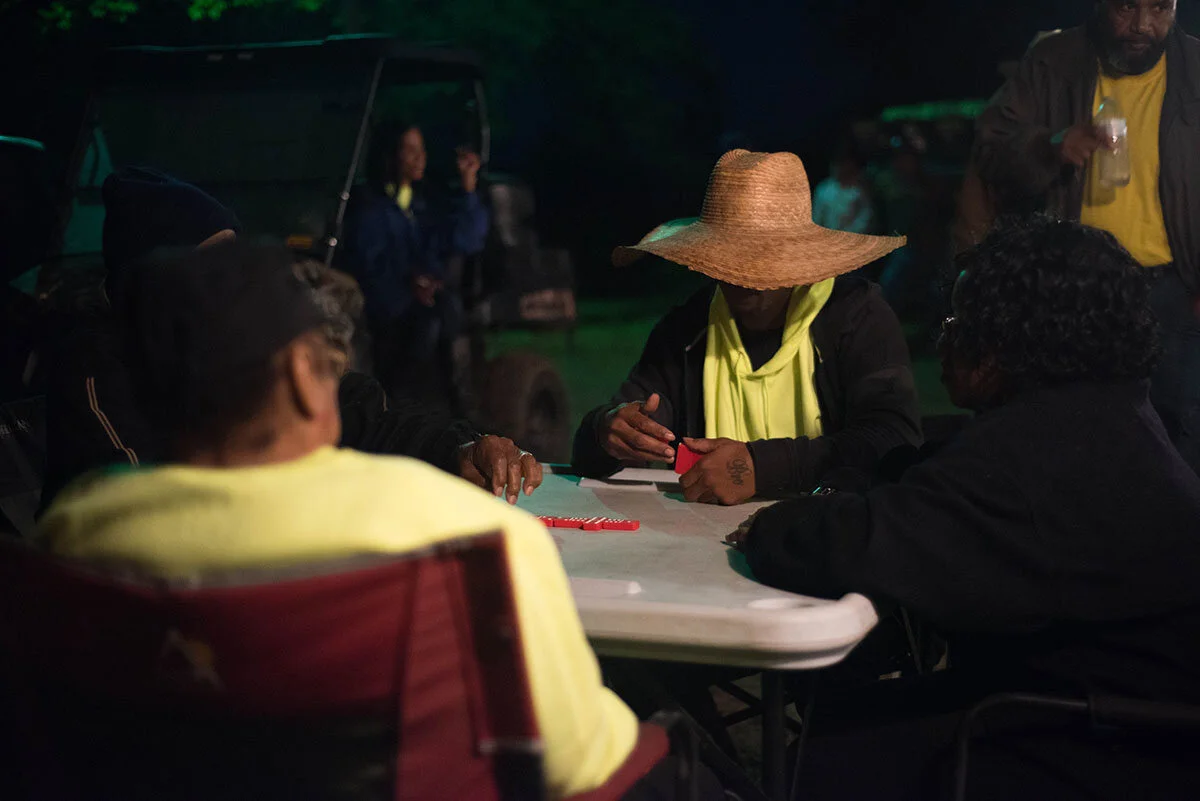
Domino Game, 2018 © Jamie Robertson

Domino Game, 2018 © Jamie Robertson

An Autobiographical Photobook on Black Life in Leon County, Texas 

Jamie Robertson uses her family history to reconcile wider narratives around the African Diaspora in her new book from Fifth Wheel Press, Charting the Afriscape of Leon County.

Robertson pairs images from her childhood and family archive with new landscape photographs and tableaux, and text, often from her family mythos and West African cosmologies, giving her images greater context.

A darkly lit yet highly saturated photograph of domino players, their faces obscured by shadow and a wide-brimmed straw hat on one page, a 1980s family reunion snapshot on the other. Dominos, a constant in her family history, symbolize generational ties, traditions, and holding fast to cultural and family evolutions.

In another pairing, Robertson re-photographs a landscape on her family’s property originally depicted in an image from her family's archive, the new image in conversation with the original on an opposite page. Instead of approaching the two photos as a “then and now” typology, the new photograph takes on a spiritual aspect. The pairing becomes a personal meditation on how we remember a place, and the potential for spirituality to soak into its memory.

Charting the Afriscape of Leon County, Texas highlights and centers the importance and continuity of Black life, spirituality, and its intersection with the land throughout Robertson’s lineage and creative practice.

We recently spoke about Robertson’s work, her family history, and the process of publishing a book during a pandemic. (Humble editor’s note: this book is being printed in a limited 1st edition of 50 copies - if you’re at all considering purchasing one, we highly recommend acting on that consideration soon.)

Jon Feinstein in conversation with Jamie Robertson

Read more …
PostedFebruary 4, 2021
AuthorJon Feinstein
Categoriesinterviews, Artists, Art News, Photobooks, Publications, Vernacular Photography
TagsJamie Robertson, Fifth Wheel Press, Charting The Afriscape of Leon County Texas, African Diaspora, Diaspora Studies, West African Cosmology
Photos © Meron Menghistab

Photos © Meron Menghistab

Life After Prison: Reclaiming Identity Through Photographic Portraiture and First-Person Narratives

A photographer, photo editor, and formerly incarcerated author discuss the power of words and photos to reclaim life and identity.

The United States has a larger prison population than any other country in the world, with over 2 million people living behind bars. But it’s also staggering to look at the state-by-state numbers. At the beginning of 2020, Washington State had nearly as many incarcerated individuals as Sudan, a developing country that has five times as many citizens. Despite Washington’s legislature being run by progressive-identifying Democrats, many deeply entrenched barriers face people after they leave prison, which contributes to joblessness, homelessness, and recidivism.

Washington has largely abolished parole, and like many U.S. states, the average length of a felony sentence has dramatically increased since the early 2000s. “Many prisoners are spending longer and longer periods of time in prison and a growing number of these prisoners will die behind bars,” according to the ACLU of Washington. In most democratic countries, a long sentence is considered to be one or two years, and a sentence beyond 10 years is extremely rare.

For those who get out of prison in Washington State, one route to avoid recidivism is the education system. A college degree can re-level the playing field for someone with a felony conviction, opening doors that might have seen permanently shut. This path often starts while still in prison: Students behind bars earn their GEDs and take university-level courses. In December, Congress struck a deal to reinstate federal Pell Grants to incarcerated college students, a tuition resource that had been prohibited since the 1994 crime bill.

Last summer, University of Washington Magazine's photo editor Quinn Russell Brown commissioned Meron Menghistab to photograph 10 men and women who earned college degrees from the University of Washington after getting out of prison. Menghistab, named one of 2020’s 30 New and Emerging Photographers to Watch, is an editorial and commercial photographer known for putting his subjects at ease and creating quiet, moving portraits. As project manager for the feature, Brown also hired Omari Amili, a formerly incarcerated author, to recruit and interview the 10 people featured in the story.

Following the feature for University of Washington Magazine, Brown, Menghistab, and Amili connected to discuss this intimate and empowering project from the perspective of the photo editor, photographer, and interviewer.

Quinn Russell Brown, Meron Menghistab, and Omari Amili in conversation.

Read more …
PostedFebruary 2, 2021
AuthorQuinn Russell Brown, Meron Menghistab, and Omari Amili
Categoriesinterviews
Tagslife after prison, Omari Amili, Meron Menghistab, Quinn Russell Brown, prison industrial complex, 30 Emerging Photographers to Watch, contemporary portraiture, empathetic portraiture, portraits as empathy, editorial portraiture, The Lit List
Newer / Older

Founded in 2005, Humble Arts Foundation is dedicated to supporting and promoting new art photography.