
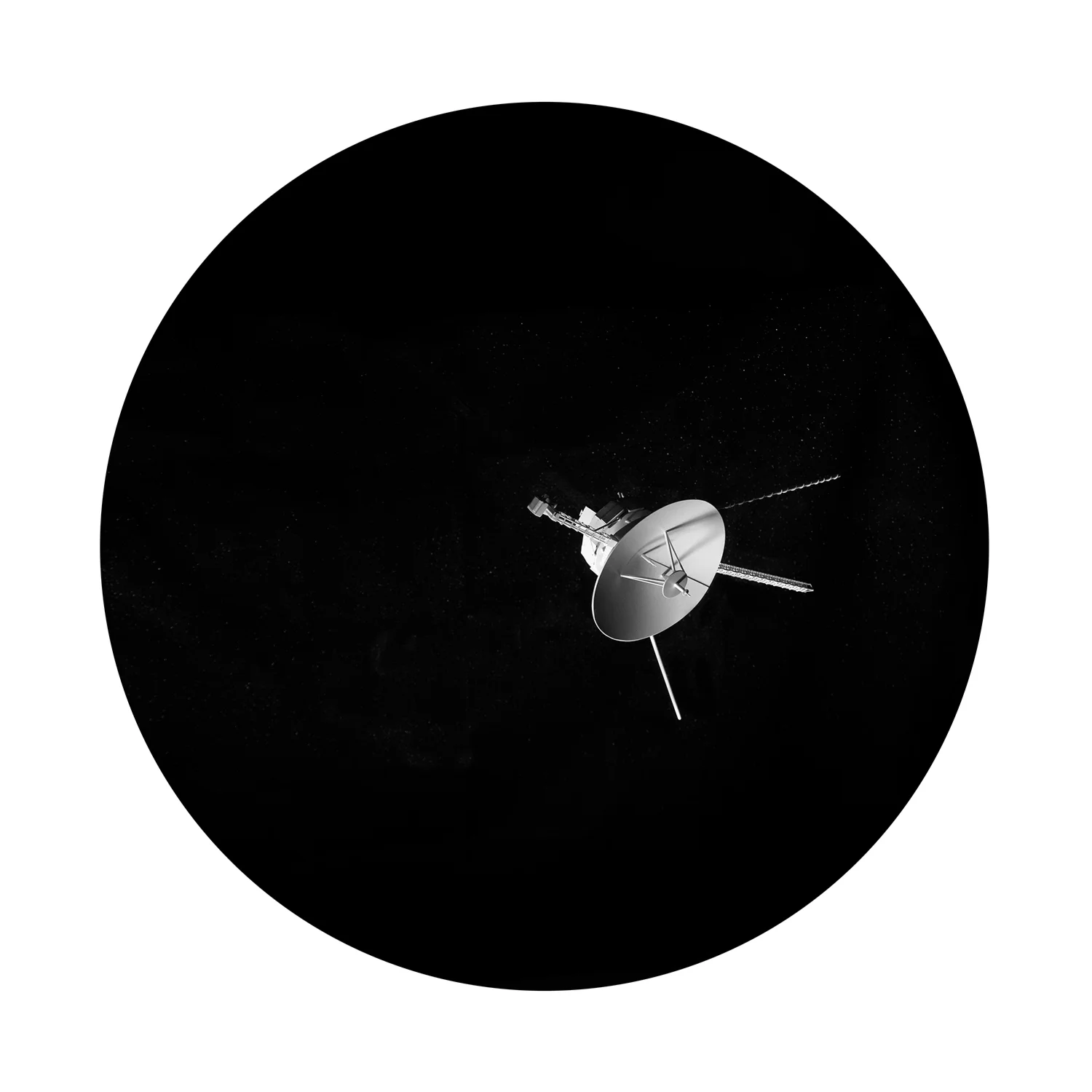
Growing up in the early 1970’s, Seattle-based photographer Bill Finger and his family would routinely gather around the television to obsessively watch the Apollo space launches. Even into into his early adulthood, he recalls being particularly moved by an NPR segment about sending a manned mission to Mars. This initially inspired Ground Control, a series about a fictitious character who tried, in vain to go to space; and more recently emerged in Voyager, circular photographs of immaculately produced dioramas that explore the complicated boundaries between fact and fiction, and self exploration.
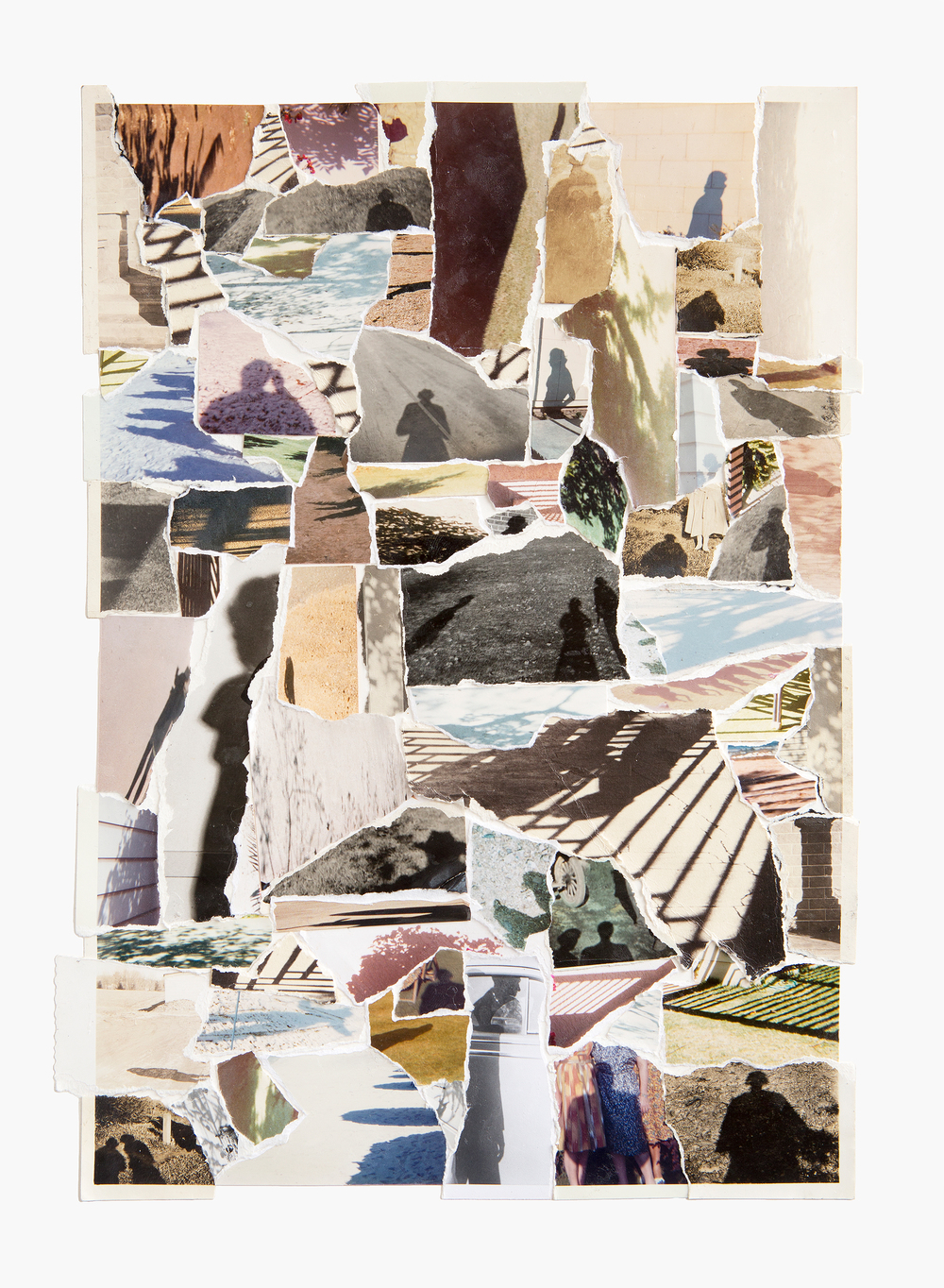
Shadows, 2016. © Joe Rudko
Joe Rudko is quickly becoming one of the most pivotal figures within the Pacific Northwest emerging art and photography community. His collages of found vernacular photographs, sourced from thrift stores, antique shops, snapshot collectors and, most recently, from a family archive discovered in abandoned shed in Washington State, turn anonymous, expired histories into sculptural monuments. Building on traditions ranging from the Dadaists of the early 20th century to the 1970's and early 1980's Pictures Generation, and even the recent work of Penelope Umbrico, Rudko's work makes appropriation exciting again. Like Umbrico, Rudko goes beyond simply re-contextualizing of found imagery. He tears up recurring tropes in family snapshots - clouds, water, sunsets and shadows - and reframes them to unveil a collective experience of viewing and valuing the world. We spoke with Rudko on the occasion of his solo exhibition, Album, on view through July 2nd at PDX Contemporary in Portland, Oregon.
© Holden Schultz
Twentieth century photography in California was born of departure. Beginning in the 1920s, pioneering photographers with familiar names - Imogen Cunningham, Dorothea Lange, Edward Weston, Ansel Adams and others - abandoned the primacy of aesthetics inspired by Pictorialism for the straight objectivity of Modernism. Generations of West Coast-based artists who followed have sustained that practice, pushing the medium’s boundaries through myriad documentary and conceptual explorations to arrive at the current moment and photography’s unparalleled popularity. That sustained enthusiasm, paired with increased institutional activity such as the opening of the SFMOMA’s Pritzker Center for Photography and smart programming in commercial spaces like Jenkins Johnson Gallery and Fraenkel Gallery, and non-profit organizations like SF Camerawork and Rayko Photo Center affirms the medium’s overall vibrant health.
Water Tower, Unique daguerrotype, 2015 © Daniel Carrillo
Photography has a rich history struggling for acknowledgement within the larger art world. In its early days, many artists and painters dismissed its artistic merits couched in a "my kid could do that" perception of mechanical process, and early debates frequently sparked over whether the medium should be regarded as an "art" or a "science." Still, into the twentieth century, The Metropolitan Museum of Art waited nearly half a century to display its second photography-focused solo exhibition, with the work of Stephen Shore (Alfred Stieglitz was first, in 1928.)
In Seattle today, despite the city's international recognition for a range of artistic media, this struggle lives on, and photography is rarely considered in the same conversation, often living in a silo'd state. This past spring, Michelle Dunn Marsh, the Executive Director of Seattle's Photographic Center Northwest had a solution.
Veer. © Rafael Soldi
Seven years ago, while living in New York City, Seattle-based photographer Rafael Soldi’s partner left him suddenly, without explanation. There were no premonitions or warning signs, and the disappearance nearly destroyed him. To help understand his pain, over the next few years, he made a series of photographs called Sentiment, which combined natural-lit portraits, still lifes and fragments of letters as a chronicle of his loss. These pictures, shot largely on film with warm, natural light show Soldi coming to terms with his individuality and sexual identity. As time passed and he gained some distance from from this emotional trauma, Soldi embarked on his most recent, ongoing body of work, Life Stand Still Here, which he’s been making for the past three years. This new series, which opens as a solo exhibition on June 2 at Seattle’s Glassbox Gallery, offers a darker, more conceptual manifestation and exploration of himself, his fears, and moments when life and its darkest facets can offer monumental symbolism.