

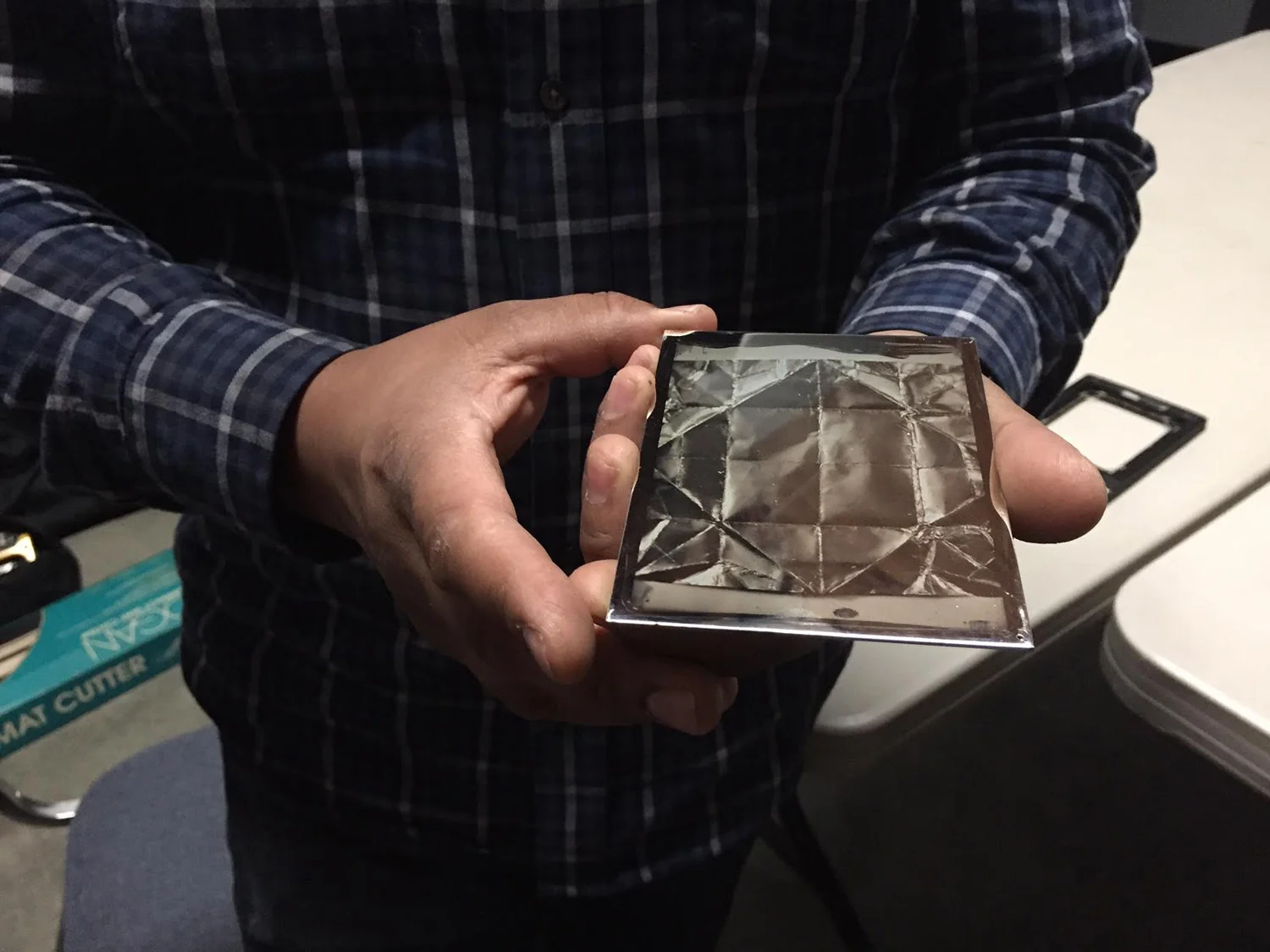
Water Tower, Unique daguerrotype, 2015 © Daniel Carrillo
Photography has a rich history struggling for acknowledgement within the larger art world. In its early days, many artists and painters dismissed its artistic merits couched in a "my kid could do that" perception of mechanical process, and early debates frequently sparked over whether the medium should be regarded as an "art" or a "science." Still, into the twentieth century, The Metropolitan Museum of Art waited nearly half a century to display its second photography-focused solo exhibition, with the work of Stephen Shore (Alfred Stieglitz was first, in 1928).
In Seattle today, despite the city's international recognition for a range of artistic media, this struggle lives on, and photography is rarely considered in the same conversation, often living in a silo'd state. This past spring, Michelle Dunn Marsh, the Executive Director of Seattle's Photographic Center Northwest had a solution. She initiated RIFFS, a cross-platform experimental residency, hosted at PCNW with artists ranging from large-format photographer Eirik Johnson and Daguerreotype artist Daniel Carrillo, to glass (and now, augmented reality) artist Ginny Ruffner, and Seattle electronic psychedelic soul and “hologram funk” singer/songwriter luminary Catherine Harris-White, aka Sassy Black. Dunn Marsh invited PCNW public programs curator Chieko Phillips and Humble's own Jon Feinstein to co-facilitate, leading three months of studio visits and critique sessions. For those living outside of Seattle's reach, we've included some highlights from the exhibition and insights from participating artists about their experience working outside the frame.

© Daniel Carrillo and Eirik Johnson
Photographers Daniel Carrillo and Eirik Johnson worked on a direct collaboration, fusing their seemingly different practices -- Johnson with his large format, often conceptual explorations of the natural and built world, and Carrillo with his contemporary take on daguerreotype portraiture. After his seven year old son’s recent obsession with origami, specifically using metallic paper, Johnson was drawn to its glimmering surface, which sparked a series of still life Daguerreotype photographs of unfolded origami structures that Johnson’s son had made. “As an artist who typically works independently on long-term projects,” says Johnson, “the RIFFS program reminded me of the importance of experimentation and play.” Carrillo adds: “It has inspired me to dig a little deeper in my own practice as an artist and explore conceptual photography”
Before the PCNW residency, Catherine Harris White, AKA Sassy Black from the recently defunct Seattle R&B and Hip Hop duo Thee Satisfaction didn’t consider herself a visual artist, focusing predominately on her music and collaborations with other musicians. Her work for RIFFS, a video installation incorporating her music and grabs from her snapchat feed is a crazy, psychedelic experience. While the work was not made in direct, or literal collaboration, the critique sessions helped her to expand and redefine her artistic practice and the way she sees herself, no longer as just a musician, but as an artist with many layers. “I realized that I am a multi-dimensional artist.” says Harris. “This is something that I have working through my entire career, constantly thinking I wasn't good enough in many areas. Finally I am realizing that I have strong talents and skills that can be used in many different fields of creativity and craft.”
Megumi Shauna Arai’s work ranges from performative self portraits to interactive sculptures and experiments with Japanese fabrics, and owes just as much to fashion and lifestyle photography as she does to conceptual art. Arai collaborated with dancer Jim Kent to create two, cut out semi-nude photographs of the dancer printed on adhesive photographic paper, with thin strips of paper ascending toward the ceiling - both supporting his figure and accentuating his frailty. “I really thrive talking and meeting with other artists and having a community,” she says. “I sometimes get tunnel vision and end up working and thinking alone a lot.”
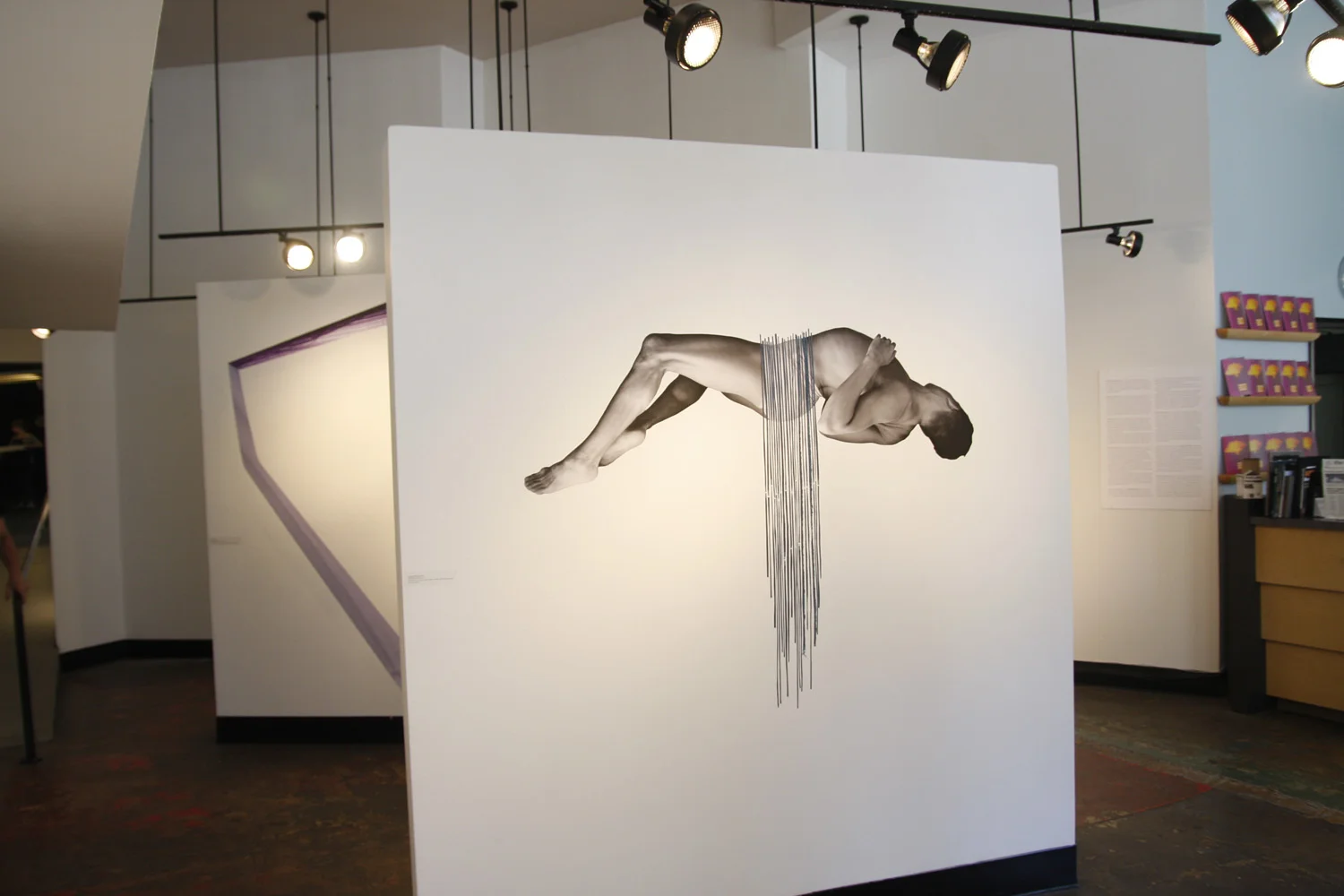
Installation photo credit: Anne Pallesen
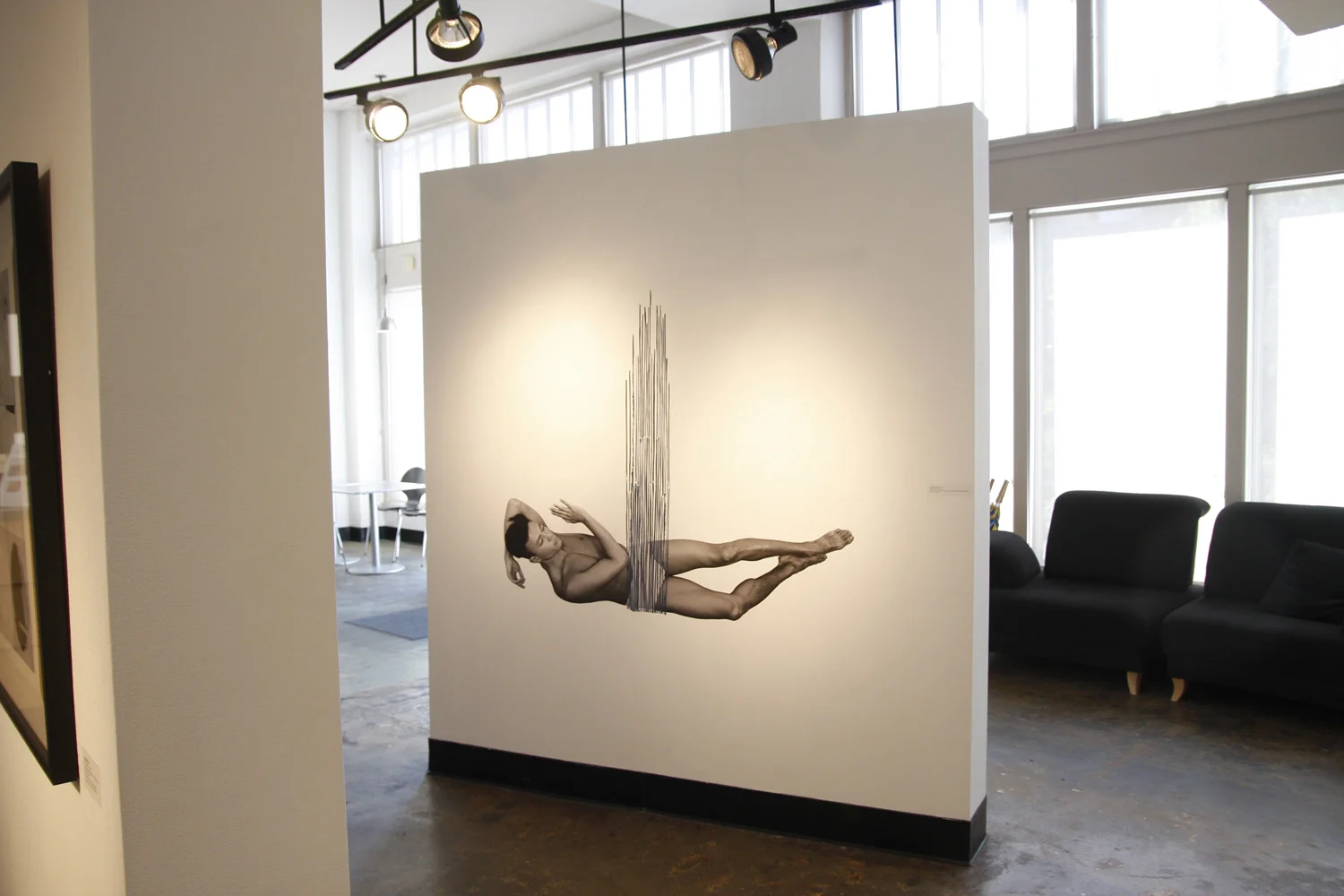
Installation Photo Credit: Anne Pallasen
Ginny Ruffner, a Seattle staple largely acclaimed for her large scale public glass art used the residency to create work aligned with her recent interest in virtual and augmented reality. Working with motion designer and new media artist Grant Kirkpatrick, Ruffner used the AUGMENT app to transform Edward Weston inspired black and white photographs of fruit and vegetables into 3D, Roger-Rabbit-esque cartoons. “From Riffs came the unexpected realization of the contradictory nature of photography,” says Rufner, “as being both extremely simple and extremely complex.”
You can download the Augment app yourself from the Apple store and point it at the image below!
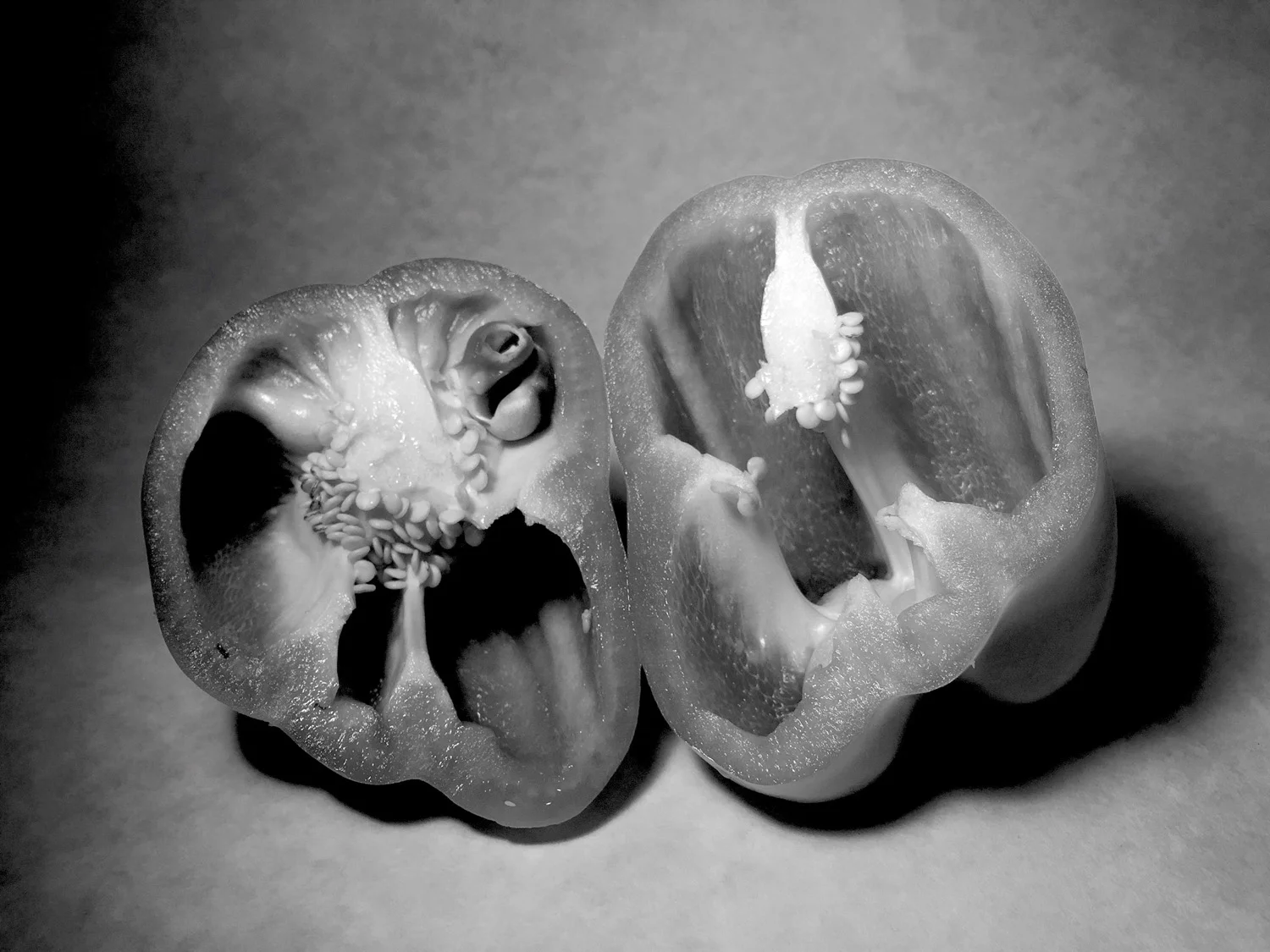
© Ginny Rufner
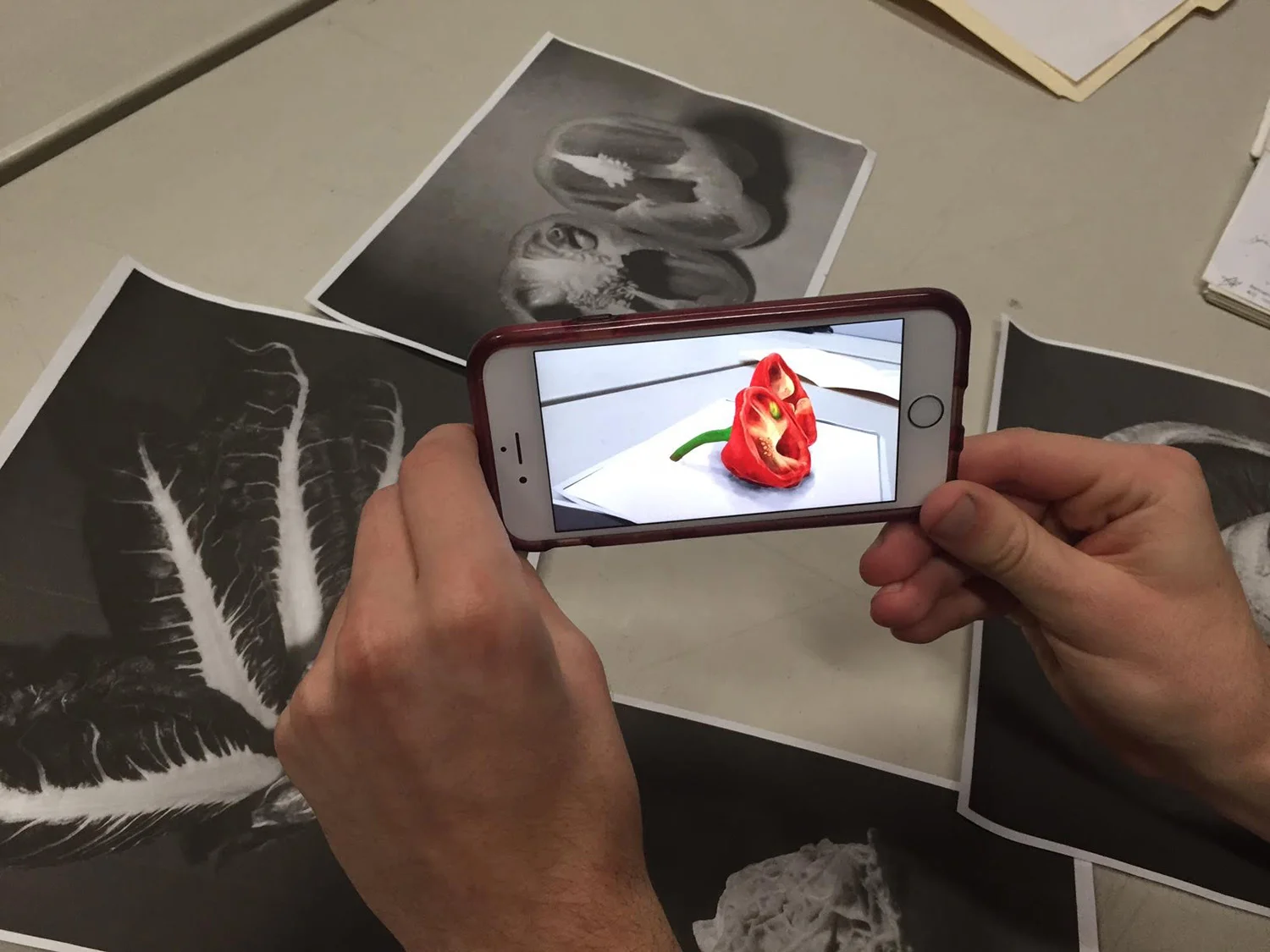
Augmenting Edward Weston during an early RIFFS session.
Seattle native Jeffry Mitchell, known for his idiosyncratic sculptures, drawings and prints rarely worked with photography before RIFFs, and his final exhibited work, on the surface, might appear far from photographic, but its process subtly alludes to photographic seeing and process. Pee Wee’s Window, a diptych of two digitally printed red, and black and white curtains made in slight homage to Pee Wee’s playhouse hang at the PCNW entryway. For Mitchell, the experience or constant discussion and engagement with other artists helped get him to his final work. “Always it seemed the benefit is an opening up to things, thoughts and ways to be and do,” he says. “The time spent sitting and listening in the presence of your peers is as valuable as making stuff.”
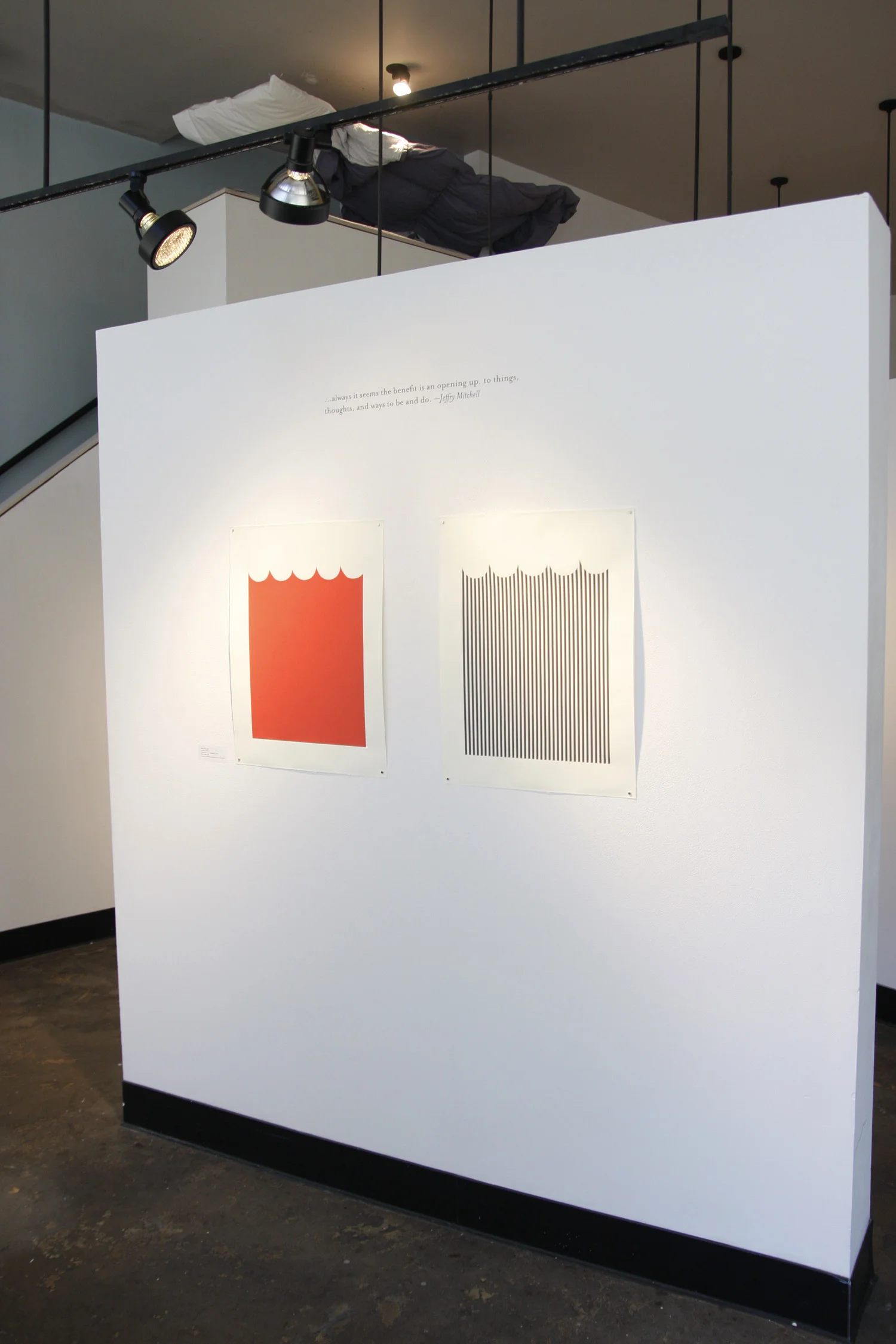
Installation photograph © Anne Pallasen
Victoria Haven, whose work often combines spontaneous sculpture, installation, and has subtly integrated photography (namely gelatin silver prints) throughout her career, created a new path to her large scale wall drawings, using adhesive photo fabric printed in PCNW’s digital lab. “For years I've been thinking about ways to expand the color and texture options of 'collage' materials I use for these works,” she says, “and I think I've finally discovered a way to manipulate these surfaces; through printed means.” On the collaborative nature of the residency, Haven describes the experience as a “catalyst for experimentation. Although I didn't work directly in collaboration with anyone during this residency, it has sparked my desire to try it.”
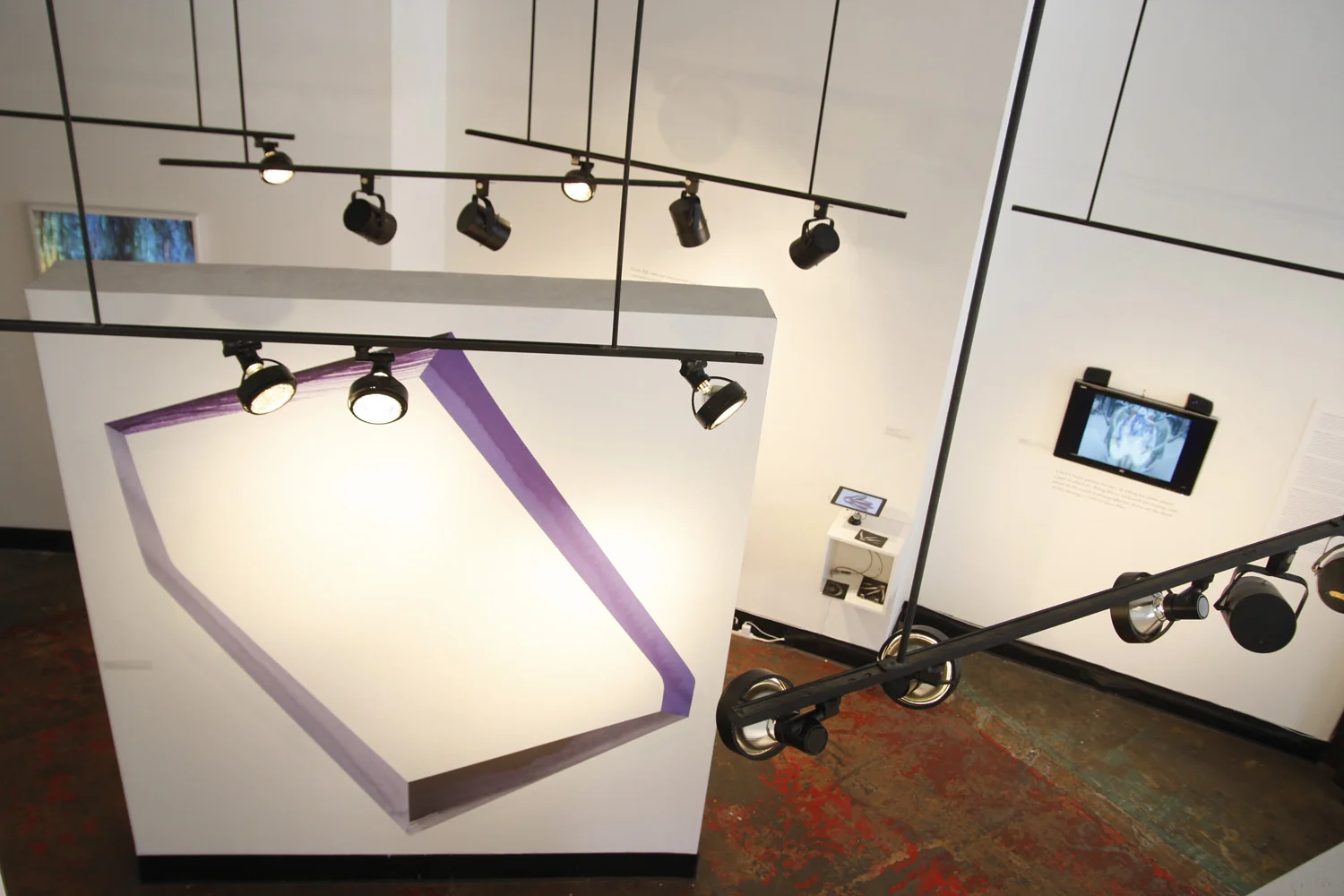
Installation photograph © Anne Pallasen
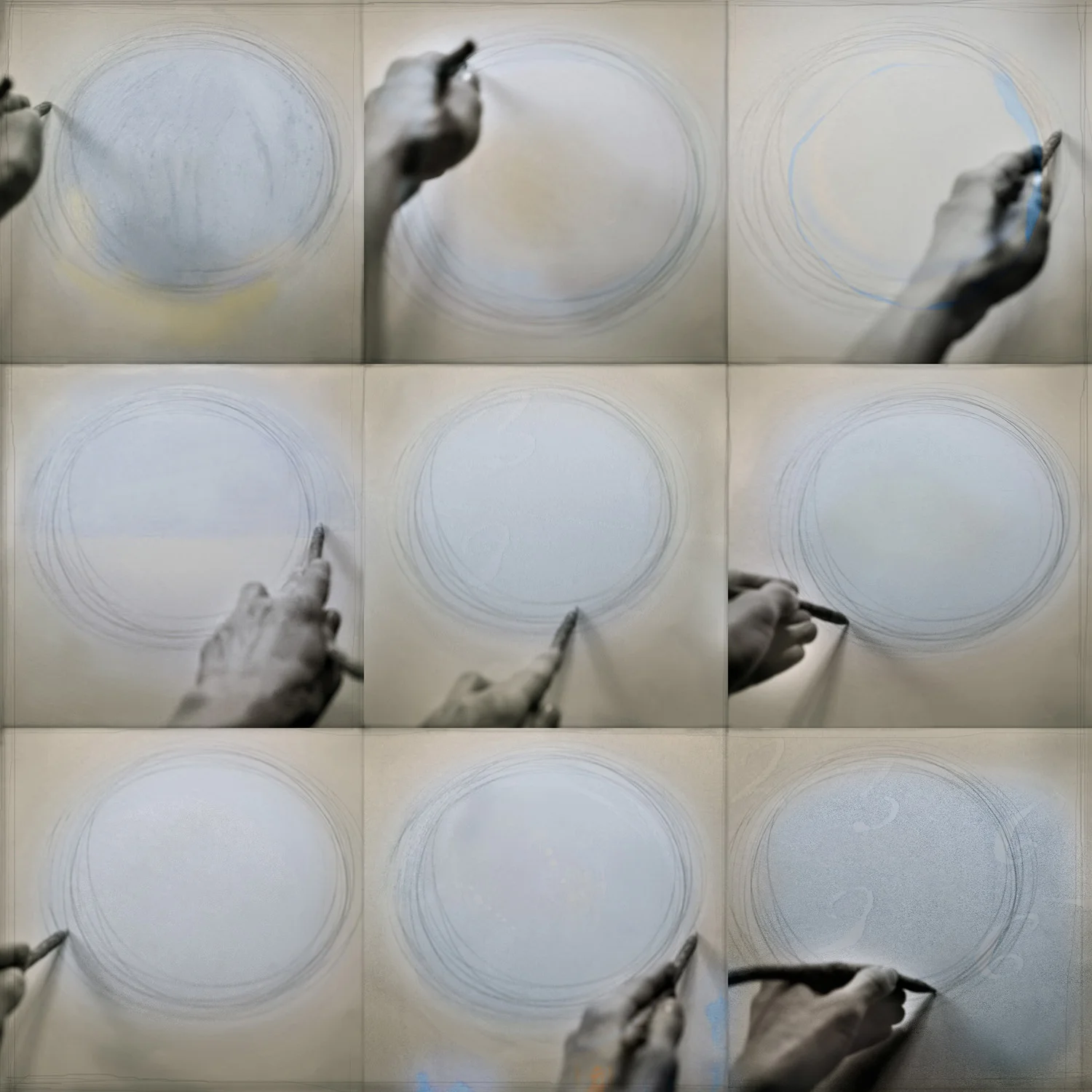
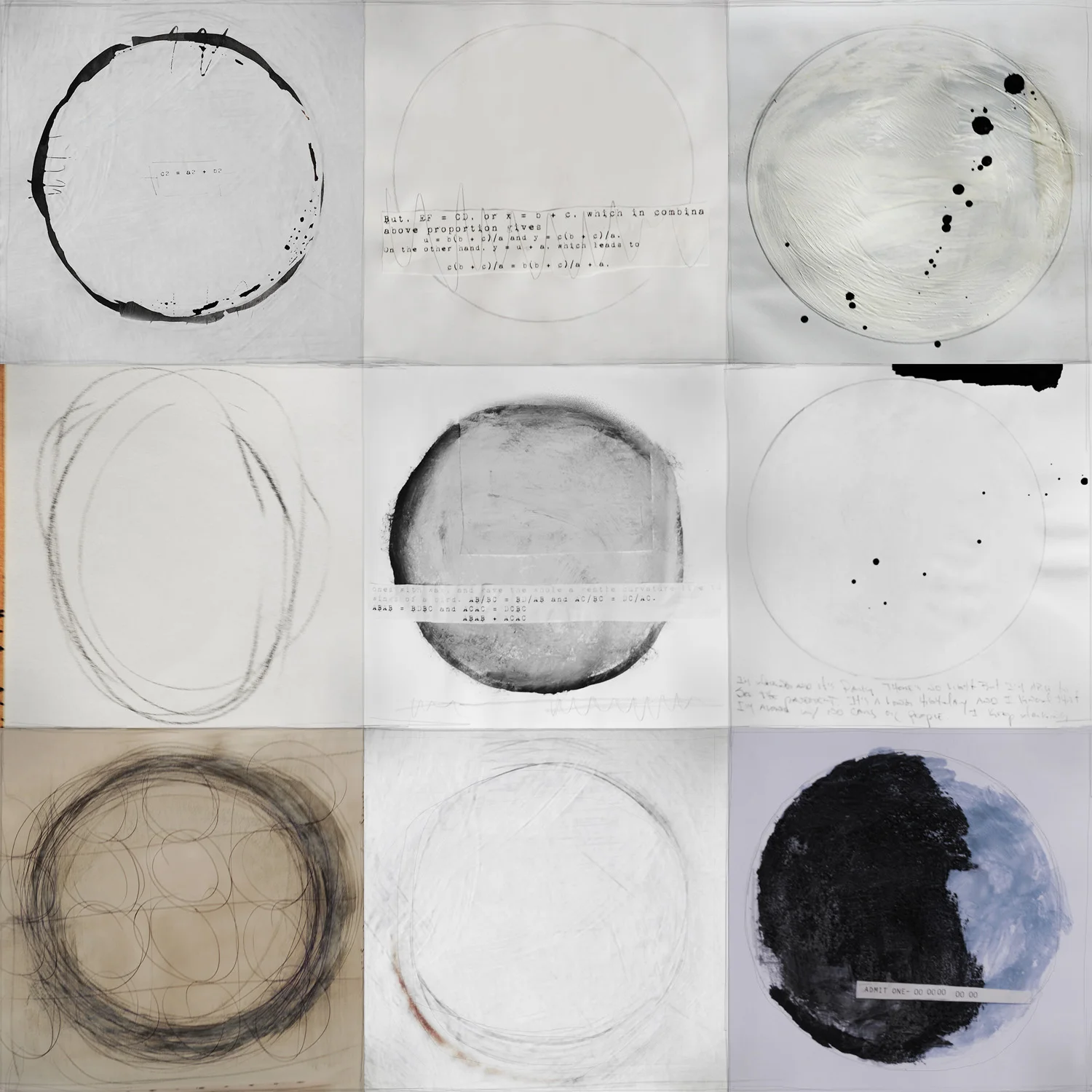
Peggy Washburn, whose work for more then two decades has incorporated painting, photography, and various other media made two pieces during the residency that fed off of unique collaborations in and outside of the discussion group. Learning To Write Again, is based on Washburn, who is naturally left-handed, being forced as a child to write with her right hand. The grid of nine photos recreate her childhood experience of repetitiously drawing circles with her weaker hand, trying to get it right, in a way that is both tender and psychologically grueling. Washburn has integrated circles into much of her practice, and included them in her second piece which she made in honor of an immaculately composed transient woman whom she encounters on her daily runs in Seattle. "I remain fascinated by her, her world and its infinite possibilities," says Washburn. "Stressful, exhilarating, and the very idea of living in a perpetual state of travel." As her experiences relate to the process of collaboration, she adds "I was actually able to let go of any inward barriers and explore / incorporate the suggestions of others into my own work, which pushed me to move outside of my 'go to' and create something completely unexpected."
More about Photographic Center Northwest: Founded in the Early 1980's, Photographic Center Northwest is an educational institution dedicated to facilitating creation, conversations and experiences of significant photography. Through their certificate program in fine art photography, exhibitions and an array of public programming, they foster dialogue in the region through the global language of today.